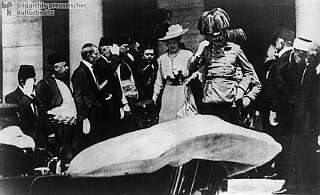
Franz Ferdinand and his wife Sophie leaving Sarajevo Town Hall on 28 June 1914, five minutes before the assassination.
The Good Soldier Švejk is a novel with an exceptionally rich cast of characters. Alongside those who play a direct part in the plot, a great many fictional and real people (and animals) are mentioned throughout the narrative, in Švejk's anecdotes and in the book's idioms and turns of phrase.
This page offers brief entries on the people referred to in the novel, from Napoléon in the introduction to Hauptmann Ságner in the final lines of the unfinished Part Four. The list is sorted in the order in which names first appear. Chapter headings follow Zenny Sadlon's recent translation (1999–2026) and, in most cases, differ from Cecil Parrott's 1973 version.
The Czech quotations are taken from the online version of The Good Soldier Švejk provided by Jaroslav Šerák and link to the relevant chapter. The toolbar provides direct links to Wikipedia, Google Maps, Google Search, svejkmuseum.cz and the novel online.
The names are colour-coded according to their role in the novel, as illustrated by the following examples:
Dr. Grünstein, a fictional character directly involved in the plot.
Fähnrich Dauerling, a fictional character who is not part of the plot.
Heinrich Heine, a historical person.
Note that many seemingly fictional characters are inspired by real people. Examples include Oberleutnant Lukáš, Major Wenzl and many others. These are still listed as fictional, since they are literary creations only partly inspired by their similarly named 'models'.
Military ranks and other titles related to Austrian officialdom are given in German, in accordance with the terms used at the time (explanations in English are provided as tooltips). This means that Captain Ságner is still referred to as Hauptmann, even though the term is now obsolete and has been replaced by Kapitän. Civilian titles denoting profession, etc., are translated into English. This also applies to ranks in the nobility where a direct translation exists.
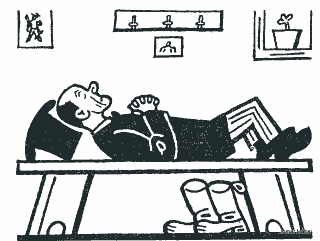
Karderaz
was a gentleman from Loděnice who slept with his top hat under his head without flattening it. This is what Švejk could tell Major Derwota after the latter had spent the night in his cell in Przemyśl.
Quote(s) from the novel
[IV.3] Vyspat se na cylindru, to doved jenom nějakej pan Karderaz v Loděnici.
Derwota
was the officer who interrogated Švejk in Przemyśl and woke up in the prison cell with the accused after a heavy party with his fellow officers. Before this, he had persuaded the bloodthirsty General Fink to postpone the execution until they had received confirmation of Švejk's identity from the brigade.
Quote(s) from the novel
[IV.3] „Zde jsem,“ zvolal major Derwota ve dveřích, kterému kombinace slov „major auditor“ a „telegram“ připomněla poznovu jeho jisté povinnosti. „Ach,“ vykřikl generál Fink, „ty se vracíš?“ V přízvuku bylo tolik jízlivosti, že major neodpověděl a zůstal nerozhodně stát. Generál mu řekl, aby šel s ním do pokoje, a když se posadil za stůl, hodil mu omlácený telegram o burše na stůl a řekl mu tragickým hlasem: „Čti, to je tvoje dílo.“ Zatímco major četl telegram, vstal generál ze židle, běhal po pokoji, porážel židle a taburetky, křičel: „A přeci ho pověsím!“
Bozba
was a fellow soldier whom Švejk knew from his military service in Trento. He became extremely conceited when he was promoted to Gefreiter, something which Švejk reminds his arrogant escort on the train from Przemyśl to Wojalycze about.
Background
No information about any real-life Bozba has been found, but this paragraph reveals a new and interesting detail about Švejk's military past. He did his national service not only in Budějovice, but also in Trento. However, he would not have served with Infanterieregiment Nr. 91 here, as units from this regiment were never garrisoned there.
Švejk and Trento are therefore rather a legacy from the five stories about Švejk from 1911, where the strong fortress provided the backdrop for some of them. These were written at a time when Jaroslav Hašek himself had no experience of the military, and the number of the regiment in which Švejk served is not stated.
Quote(s) from the novel
[IV.3] „Pane frajtr, když se na nich koukám, tak si vzpomínám vždycky na nějakýho frajtra Bozbu, kterej vám sloužil v Tridentu. Toho když jmenovali frajtrem, tak hned ten první den najednou začal přibejvat do vobjemu.
Macháček
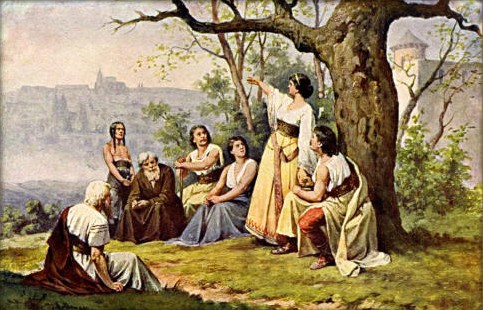
was the perpetrator in the snot story about the legendary Czech princess Libuše. This is a story Švejk tells a Pole who is a member of his escort from Przemyśl to Wojalycze. Macháček lived in a basement flat on Na Bojišti street.
Quote(s) from the novel
[IV.3] „To toho moc neumíš,“ řekl k němu Švejk. „Na Bojišti bydlel v jednom sklepním bytě metař Macháček, ten se vysmrkal na vokno a rozmazal to tak dovedně, že z toho byl obraz, jak Libuše věští slávu Prahy.
Libuše
is the mythical founder of the Přemysl dynasty and the ancestress of the Czech people. She is said to have founded Prague in the 8th century.
Quote(s) from the novel
[IV.3] „To toho moc neumíš,“ řekl k němu Švejk. „Na Bojišti bydlel v jednom sklepním bytě metař Macháček, ten se vysmrkal na vokno a rozmazal to tak dovedně, že z toho byl obraz, jak Libuše věští slávu Prahy.
Gerbich
was a colonel who was head of the brigade staff at Wojalycze. His main distinction was his gout-ridden toe, the state of which decisively determined his mood. Fortunately for Švejk, Leutnant Dub was also a victim of the colonel's fits of bad temper.
Quote(s) from the novel
[IV.3] Tak se blížili ku štábu brigády do Wojalyzce. Mezitím se u štábu brigády zběhly jisté velice podstatné změny. Řízením štábu brigády byl pověřen plukovník Gerbich. To byl pán velkých vojenských schopností, které se mu vrazily do nohou ve formě podagry.
Habermaier
was a homosexual colonel whom Švejk had heard had tried to assault a cadet in Trento twelve years ago (1903). These thoughts made him melancholy on his way to Klimontów.
Quote(s) from the novel
[IV.3] Švejk pokračoval na své cestě do vesnice, a přemýšleje o plukovníkovi, dospěl k tomu úsudku, že před dvanácti lety byl v Tridentu nějaký plukovník Habermaier, který se také tak laskavě choval k vojákům, a nakonec vyšlo najevo, že je homosexuelní, když chtěl v lázních u Adiže zprznit jednoho kadetaspiranta, vyhrožuje mu „dienstreglamá“.
Kulíšek
is mentioned in a short anecdote by Švejk, the first after he rejoins his regiment in Klimontów. He was a tinsmith from Prague.
Quote(s) from the novel
[IV.3] „Hlavně jasně mluvit,“ prohodil Švejk. „Když byli misionáři u svatýho Ignáce v Praze v roce 1912, tak tam byl jeden kazatel, a ten povídal s kazatelny, že se asi s nikým neshledá v nebi. A byl na té exercici večerní jeden klempíř, Kulíšek, a ten po tý pobožnosti povídal v hospodě, že ten misionář musel asi moc věcí provést, když v kostele vohlašoval, jako při veřejný zpovědi, že s nikým se neshledá na nebi; proč takový lidi posílají na kazatelnu.
Banseth
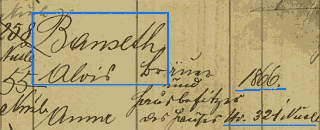
was the owner of the restaurant U Bansethů in Nusle, in fact two of them. He and his wife Anna opened the first one in Palackého třída No. 321 (now Táborská) in the autumn of 1900, and in 1908 they sold it and moved to No. 389 a few steps up the street. They actually bought the whole building for 100,000 crowns.
Banseth was born in Kutná Hora in 1866, son of František (b. 1824) and Anna (b. 1828). The parents seem to have moved to Smíchov in 1874, then to Žižkov in 1885, then to Holešovice in 1892. There were eight children in the family, who hailed from Golčův Jeníkov where the oldest children were born.
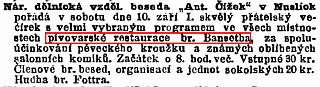
Banseth himself is registered with domicile in Nusle from 1893 and appears to have lived there for the rest of his life. Before opening his first restaurant in 1900, he had managed the restaurant at the local brewery. By then he had already appeared in newspaper notices because public meetings were arranged at the brewery restaurant. Here he is listed as "brother Banseth", which means he was a member of Sokol.
Banseth was married to Anna (born Daršetová in 1871) and the couple had five children. Their eldest son František (born 1892) went missing early in the war and was reported as a Russian prisoner of war. Banseth was running the tavern at least until 1923, but some time before 1929 he died. His widow Anna passed away as late as 24 January 1948.
Quote(s) from the novel
[IV.3] Vona potom chtěla mít celou soupravu do domácnosti z takovejch nožů a posílala ho vždycky v neděli do Kundratic na vejlet, ale von byl tak skromnej, že nešel nikam než k Banzetovům do Nuslí, kde věděl, že když sedí v kuchyni, že ho dřív Banzet vyhodí, než může na něho někdo sáhnout.“
Chramosta
is mentioned in an anecdote Švejk tells Einjährigfreiwilliger Marek from manoeuvres in Tábor. It concerns soldiers committing immoral acts with the local female population.
Quote(s) from the novel
[IV.3] To byl zrovna takovej případ na manévrech u Tábora. Náš jeden cuk kvartýroval v hospodě a nějaká ženská drhla v předsíni podlahu a nějakej Chramosta se k ní přitočil a poplácal ji - jak bych ti to řekl - po sukních.
Hallimulahbalibej
was one of the Tatar names Švejk reels off when he tells the officers in Klimontów about the transport of Russian prisoners of war.
Quote(s) from the novel
[IV.3] Když potom jmenoval tatarská jména, s kterými se seznámil na své pouti, jako Hallimulabalibej, ke kterýmž jménům přidal celou řadu jmen vytvořených jím samým, jako Valivolavalivej, Malimulamalimej, nezdržel se již nadporučík Lukáš poznámky: „Že vás kopnu, vy dobytku. Pokračujte krátce, ale souvisle!“
Valivolavalivej
was one of the Tatar names Švejk reels off; he invented this one himself. See Hallimulahbalibej.
Quote(s) from the novel
[IV.3] Když potom jmenoval tatarská jména, s kterými se seznámil na své pouti, jako Hallimulabalibej, ke kterýmž jménům přidal celou řadu jmen vytvořených jím samým, jako Valivolavalivej, Malimulamalimej, nezdržel se již nadporučík Lukáš poznámky: „Že vás kopnu, vy dobytku. Pokračujte krátce, ale souvisle!“
Malimulamalimej
was one of the Tatar names Švejk reels off; he invented this one himself. See Hallimulahbalibej.
Quote(s) from the novel
[IV.3] Když potom jmenoval tatarská jména, s kterými se seznámil na své pouti, jako Hallimulabalibej, ke kterýmž jménům přidal celou řadu jmen vytvořených jím samým, jako Valivolavalivej, Malimulamalimej, nezdržel se již nadporučík Lukáš poznámky: „Že vás kopnu, vy dobytku. Pokračujte krátce, ale souvisle!“
Zimmermann
was the commander of 12. Kompanie. He threw a mug at Švejk, a behaviour that can be explained by the fact that he had drunk spirits from it. The spirits were distilled from onions and bought from a Jew. His military rank is not stated.
Background
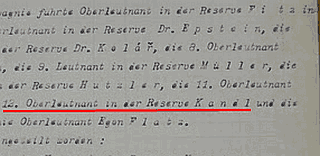
Zimmermann seems to be a randomly picked name. From 11 July 1915OberleutnantPaul Kandl was commander of the 12th field company. Nor can any officer by the name of Zimmermann be found in any of the lists of officers in Infanterieregiment Nr. 91.
Quote(s) from the novel
[IV.3] Od 12. kumpanie velitel Zimmermann hodil po Švejkovi hrníčkem, z kterého pil mocnou kořalku od žida.
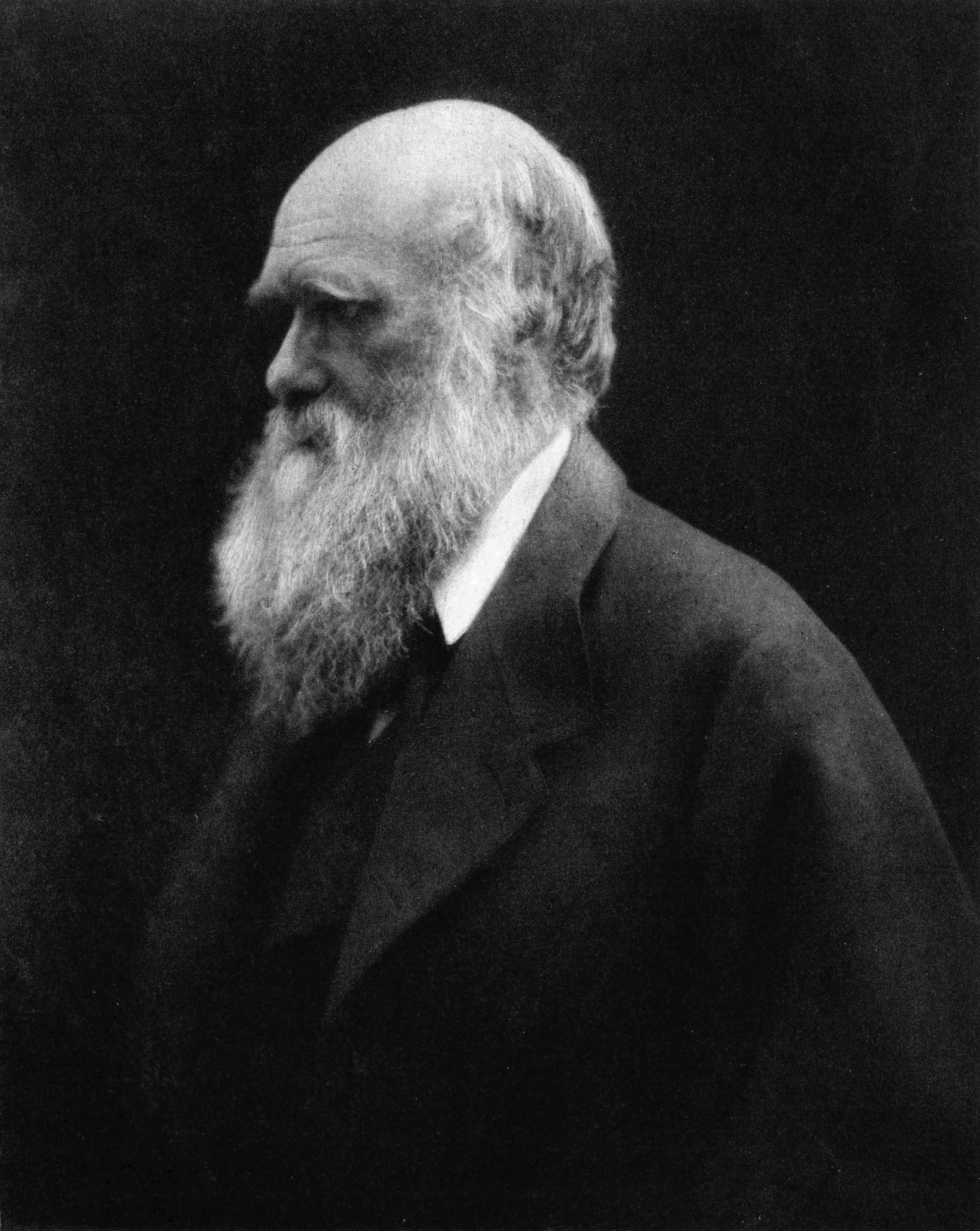
Darwin
was a British naturalist. He is considered the founder of the theory of evolution, which states that evolution by natural selection has shaped life on Earth. In this way, he became the most influential theorist in biology and is known as one of the most important scientists of all time. The book The Origin of Species by Means of Natural Selection, or The Preservation of Favoured Races in the Struggle for Life, usually abbreviated to The Origin of Species, presented his theory of development through natural selection, and is considered his principal work.
Quote(s) from the novel
[IV.3] „Ostatně,“ řekl Jurajda, kterého dnes vepřové hody úplně přivedly z rovnováhy a popletly, „všichni lidé povstali z kaprů. Vezměme si, přátelé, vývojovou theorii Darwina...“ Další jeho uvažování přerušeno bylo vpádem jednoročního dobrovolníka Marka. „Zachraň se, kdo můžeš,“ zvolal Marek; „poručík Dub přijel před chvílí automobilem ke štábu batalionu a přivezl s sebou toho posraného kadeta Bieglera.
Malý
was a junior officer who was singing an aria from the opera La Traviata at the vicarage in Klimontów, while burping from sauerkraut.
Quote(s) from the novel
[IV.3] Za chvíli přišli do kuchyně, kterou se muselo projít, když se šlo nahoru, kde seděl celý důstojnický sbor a kde po vepřové kýtě zpíval baculatý praporčík Malý árii z opery „Traviata“, krkaje přitom po zelí a mastném obědě.
Nostitz-Rieneck
is referred to via a note which Kadett Biegler quotes to Leutnant Dub when the latter gets stomach problems during the car journey from Wojalycze to Żółtańce. The note was called Was schadet dem Magen im Kriege (What harms the stomach in war).
Background
Nostitz-Rieneck
was, according to Kadett Biegler, a cavalry Field Marshal, but it is not clear who he has in mind or whether such a note ever existed. It is tempting to believe that the pamphlet is a product of the author's imagination.
Nostitz-Rieneck was a well-known family of nobles from Bohemia, the author presumably refers to one of its members. The three mentioned below all reached the rank of Field Marshal-Lieutenant in the cavalry.
In 1912 a lieutenant Graf Ervin Nostitz-Rieneck served with the cavalry in Karlín at k.u.k. Dragonerregiment Nr. 14. See also k.u.k. Dragoner.
In his diary, Jan Eybl notes that one Nostitz served with him in August 1915, after the battle of Sokal. Hašek was in the same unit during this period and may have borrowed his name.
Hans-Peter Laqueur
Drei Träger dieses Namens erreichten als Kavallerieangehörige den Rang eines Feldmarschall-Leutnants:
- Hermann Graf von Nostitz-Rieneck, 1817-1895 - sein Sohn Albert, 1843-1929 - ein Neffe Johann, 1847-1915
Quote(s) from the novel
[IV.3] „Feldmaršálek Nostitz-Rhieneck, elita reservní kavalerie,“ odpověděl na to Biegler, „vydal spis ,Was schadet dem Magen im Kriege’, ve kterém nedoporučoval při válečných útrapách a svízelích vůbec jísti vepřového masa. Každá nestřídmost na pochodu škodí.“
Josef Linek
is at the centre of Švejk's penultimate anecdote. He was a sausage-maker from Jindřichův Hradec who put insect powder in the sausages.
Quote(s) from the novel
[IV.3] „V Jindřichově Hradci,“ ozval se Švejk, „byl před lety uzenář Josef Linek a ten měl na polici dvě krabice. V jedné měl směs všeho koření, které dával do jitrnic a jelit. V druhé krabici měl prášek na hmyz, poněvadž ten uzenář už několikráte zjistil, že rozkousali jeho kunšofti v buřtě štěnici nebo švába.
Zákrejs
was an obrlajtnant from Budějovice who featured in Švejk's final anecdote.
Quote(s) from the novel
[IV.3] „Ještě za míru,“ s neobyčejnou vážností řekl Švejk, „točila se celá vojna kolem kuchyně a kolem nejrozmanitějších jídel. Měli jsme vám v Budějovicích obrlajtnanta Zákrejse, ten se točil pořád kolem důstojnický kuchyně, a taky, když ňákej voják něco proved, tak si ho postavil hapták a pustil se do něho: ,Ty pacholku, jestli se to bude ještě jednou opakovat, tak udělám z tvý huby důkladně naklepanou roštěnku,rozšlápnu tě na bramborovou kaši a pak ti to dám sežrat. Poteče z tebe kaldoun s rejží, budeš vypadat jako prošpikovanej zajíc na pekáči. Tak vidíš, že se musíš polepšit, jestli nechceš, aby lidi mysleli, že jsem z tebe udělal fašírovanou pečeni se zelím.’„