




 | North Bohemia |  |
| czSeverní ČechydeNordböhmennnNordböhmen | ||
 czdeen
SearchMap czdeen
SearchMap | ||
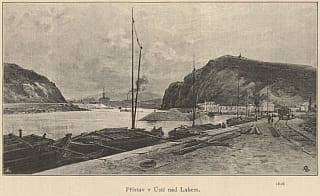
, 1892

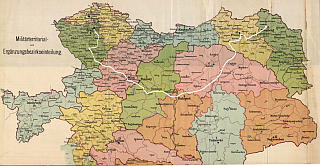
Ergänzungsbezirke Nr. 42, 92, 74, 94
,1912
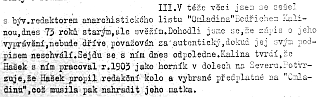
Hašek in Lom where he consumed the proceeds from selling Omladina's bicycle.
, Břetislav Hůla (Bedřich Kalina).
North Bohemia is mentioned in the epilogue to part Part One, where the narrator states that Feldkurat Katz was a procurator at a paint factory in North Bohemia. Places from the region rarely feature in The Good Soldier Švejk; among the few cases are Podmokly and Terezín.
Background
North Bohemia is a vaguely defined geographical area that refers to the area that today roughly makes up the counties Ústecký kraj and Liberecký kraj. Important towns in the area are Liberec, Děčín, Ústi nad Labem, Litoměřice, Teplice, Jablonec, Turnov, Most and Chomutov. The region is mountainous, industrialised and has extensive mining. Until 1945, the majority of the population reported German as their everyday language.
Military
Militarily, the region reported to KORPS-KO9 (Leitmeritz - Litoměřice) and the following recruitment districts fell fully or partially within this area: 42 (Terezín), 92 (Chomutov) and 94 (Turnov).
Hašek and North Bohemia
In The Good Soldier Švejk, the area hardly figures at all and Hašek spent very little time there. In 1904, however, he had an intermezzo in Lom, where he wrote for the anarchist newspaper Omladina and took part in agitation among the miners. He also worked in a mine for a short period.
The stay ended badly, as Hašek and a friend went on a drinking binge, sold a bicycle that belonged to the prominent anarchist Bedřich Kalina and consumed the proceeds from the sale[a]. Kalina later added that Hašek's mother had to pay for the bike[b]. Judging by the pieces he published in Omladina, his time in Lom lasted for only a few weeks, starting in late June 1904.
Quote(s) from the novel
[I. Doslov] Otto Katz je též na živu. Je to skutečná figurka polního kuráta. Hodil to všechno po převratě na hřebík, vystoupil z církve, dělá dnes prokuristu v jedné továrně na bronz a barviva v severních Čechách. Psal mi dlouhý dopis, ve kterém vyhrožuje, že si to se mnou spořádá. Jeden německý list přinesl totiž překlad jedné kapitoly, kde je vylíčen, jak skutečně vypadal. Navštívil jsem ho tedy a dopadlo to s ním velice dobře. Ve dvě hodiny v noci nemohl stát na nohou, ale kázal a říkal: „Já jsem Otto Katz, polní kurát, vy gypsové hlavy.“
Literature
- Kdo byli Karel Vohryzek a Bedřich Kalina?, [a]
- Dopis Zd. Ančíkovi, ,29.3.1949 [b]
| a | Kdo byli Karel Vohryzek a Bedřich Kalina? | ||
| b | Dopis Zd. Ančíkovi | 29.3.1949 |