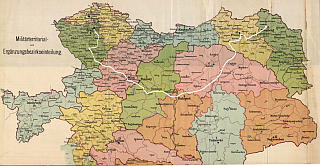
Švejk's journey is mapped on an Austria-Hungary map from 1914, showing the military districts of the
k.u.k. Heer. The entire plot of The Good Soldier Švejk is set within the territory of the former Dual Monarchy.
The Fateful Adventures of the Good Soldier Švejk (commonly known as The Good Soldier Švejk) by Jaroslav Hašek is rich in geographical
references, whether through the plot itself, in dialogues, or in the author's narrative voice. Hašek was unusually
well-travelled and had a photographic memory for geographical (and other) details. Geography mattered to him: eight
of the 27 chapter headings in the novel contain geographical names.
This website will, in due course, provide a complete overview of the novel's geographical references, from Prague in
the introduction to Klimontów in the unfinished Part Four. It includes continents, states (including defunct ones),
cities, market squares, city gates, regions, districts, towns, villages, mountains, mountain passes, oceans, lakes,
rivers, caves, channels, islands, streets, parks, and bridges.
The list is sorted according to the order in which the names appear in the novel. The chapter headings are taken from
Zenny Sadlon's recent translation (1999–2026); in most cases, these differ from Cecil Parrott's translation from 1973.
The Czech quotations are taken from the online version of The Good Soldier Švejk provided by Jaroslav Šerák and link to the relevant chapter. The
toolbar provides direct links to Wikipedia, Google Maps, Google Search, svejkmuseum.cz, and the novel online.
The names are colour-coded according to their role in the novel, as illustrated by the following examples:
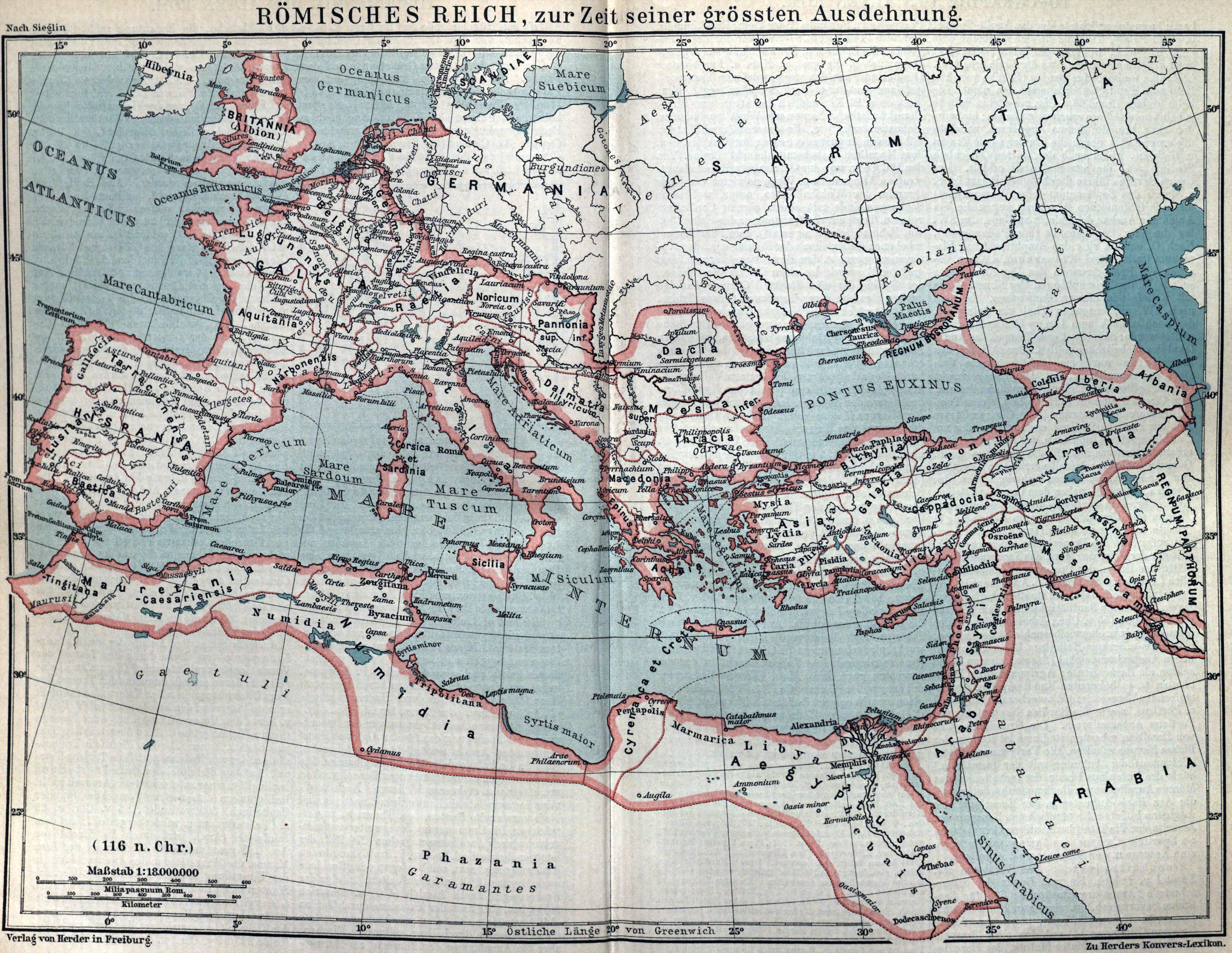
Roman Empire
is first mentioned at c.k. zemský co trestní soud when the author describes the prosecutors as "the 1914 versions of Pontius Pilatus". Later on, the empire is mentioned by the pious field chaplain in [I.12], by the author again in [II.2] (see Gallic Sea), and also on several other occasions. Overall, this surely reflects the author's interest in ancient history and history in general.
Background
Roman Empire
was a civilisation that developed from the city state of Rome, founded on the Italian peninsula in the 8th century BC. Through its lifespan of 1200 years, the Roman civilisation changed from being a monarchy to a republic to become an empire. It came to dominate the western part of Europe and the area around Mediterranean Sea by conquest and integration. The empire collapsed through foreign invasions in the 5th century, known as the end of the Roman Empire and the start of medieval times.
The Roman Empire left a lasting cultural legacy and is, together with ancient Greece, regarded as the cradle of European civilisation. Formal remnants of the empire lasted until the age of Napoléon in the guise of the Holy German-Roman Empire, where several the House of Habsburg rulers were nominal heads. Czech king Karel IV was also Roman Emperor.
Imperium Romanum fuit res publica antiqua, cuius caput erat Rome, olim maxima mundi occidentalis urbs, et quae tempore maximae suae potestatis a Britannia usque ad Mesopotamiam extensa est. Ab Augusto Caesare imperium Romanum sic institutum est, ut gubernare rem publicam uni principi solo sit.
Quote(s) from the novel
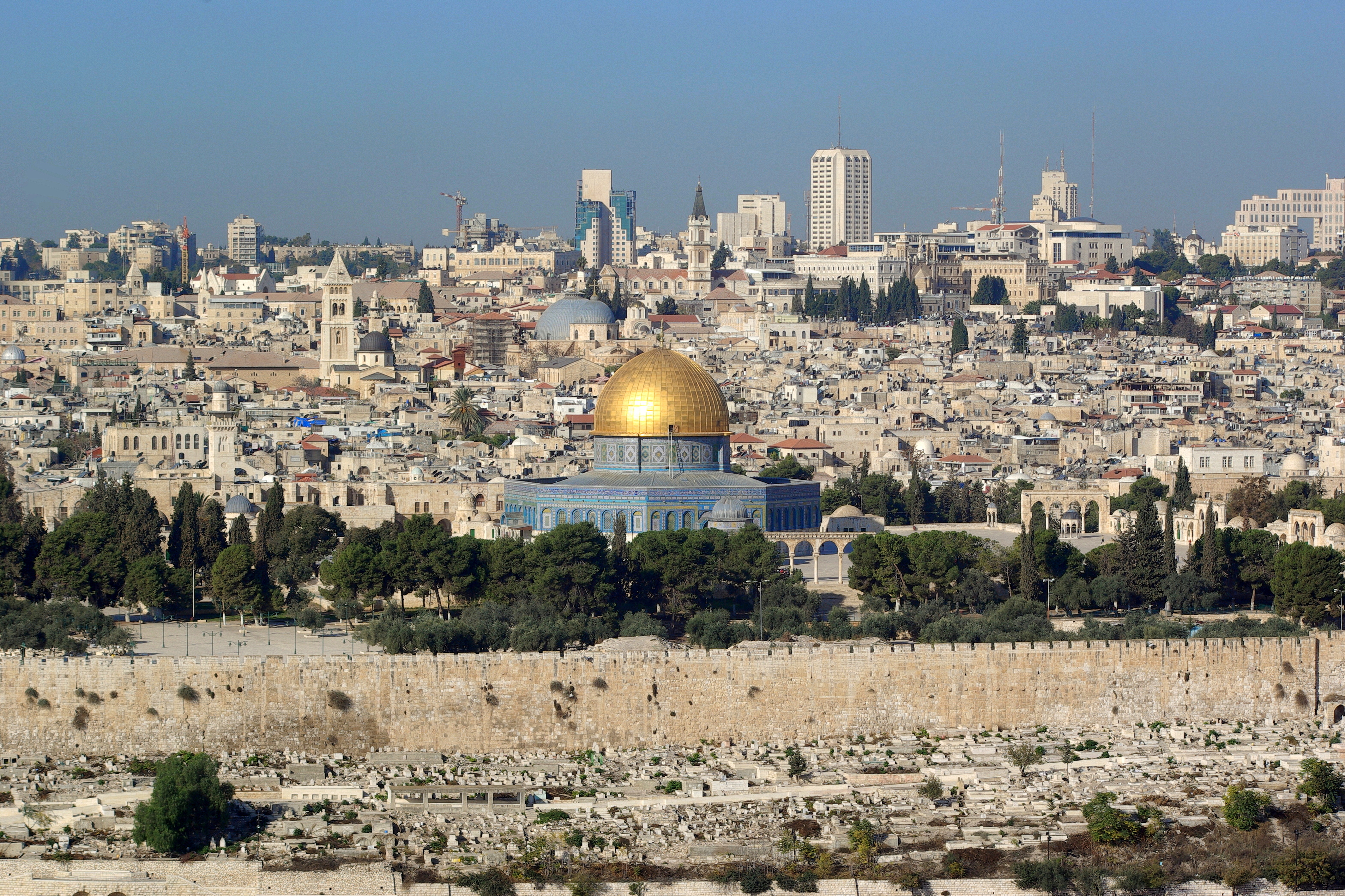
[I.3] Vracela se slavná historie římského panství nad Jerusalemem. Vězně vyváděli i představovali je před Piláty roku 1914tého dolů do přízemku.
[I.12] Zdálo se, že se vracejí doby pronásledování prvních křesťanů. Bývalý katecheta zpíval nějakou píseň mučedníků z římské arény a řval: „Věřím v pána boha, nezapřu ho. Nech si své víno! Mohu si sám pro ně poslat.“
[II.2] Tam někde na severu u Galského moře, kam až se také dostaly římské legie Caesarovy bez mapy, řekly si jednou, že se zas vrátí a pomašírujou jinou cestou, aby ještě víc toho užily, do Říma.
[II.2] ,Nieder’ zůstane ,nieder’, i kdybyste se, bando, v tom blátě rozkrájeli. ,Nieder’ bylo už ve starém Římě, tenkrát už museli všichni rukovat od sedmnácti do šedesáti let a sloužilo se třicet let v poli a neváleli se jako prasata v kasárnách. Byla tenkrát taky jednotná armádní řeč a velení. To by se na to byli páni římští důstojníci podívali, aby mužstvo mluvilo etrurisch.
Plzeň
is mentioned indirectly in connection with the Pilsner beer that the staff of c.k. zemský co trestní soud get from U Teissiga. Later in the novel, the city's name appears again when Švejk mentions the execution of gipsy Janeček.
Plzeň
was one of the most important industrial centres in Austria-Hungary. It was the monarchy's primary weapons forge and Škoda delivered the bulk of the heavy artillery to the army, and even supplied Germany.
The city is nowadays best known for having given its name to the Pilsner beer that has been brewed since 1842 and has now become a somewhat imprecise term for pale, bottom-fermented beers. The best known brands that are made in the city today are Pilsner Urquell and Gambrinus.
Hašek in Plzeň
Jaroslav Hašek visited Plzeň in the summer of 1913 together with Zdeněk Matěj Kuděj. The two writers sought out Karel Pelant, editor of the weekly Směr. He owed Hašek money for a couple of short stories but tried his best to avoid meeting the two. In the end, they tricked him into appearing at U Salzmannů and the editor ended up paying the restaurant bill for his guests after an almighty party.
The two stayed there for a couple of days and visited an impressive number of pubs. Plzeň was the final destination of a trip that had started in Prague and gone via Loděnice, Beroun, Nový Jáchymov, Rakovník, Zbiroh and Rokycany. Most of it was done on foot and Kuděj describes the trip in his book Ve dvou se to lépe táhne (1923-24). Hašek mentions the editor in the story O upřímnem přátelství[a], albeit without mentioning his name (nor does Kuděj).
On 13 September 1913, Hašek would be back, now as part of a cabaret. The other members of the group were Emil Artur Longen, Xena Longenová and Jan Leitzer[b].
Demography
According to the 1910 census, Plzeň had 80,343 inhabitants, of whom 69,779 (86 per cent) reported using Czech as their everyday language. The judicial district was okresPlzeň, administratively it reported to hejtmanstvíPlzeň.
Per the recruitment districts, infantrymen from Plzeň were usually assigned to Infanterieregiment Nr. 35 (Pilsen) or k.k. Landwehrinfanterieregiment Nr. 7 (Pilsen). More than 1,000 military personnel were, at the time, stationed in Plzeň, which was also home of Infanterieregiment Nr. 35 and k.k. Landwehrinfanterieregiment Nr. 7.
Quote(s) from the novel
[I.3] A vyšetřující soudcové, Piláti nové doby, místo aby si čestně myli ruce, posílali si pro papriku a plzeňské pivo k Teissigovi a odevzdávali nové a nové žaloby na státní návladnictví.
[II.2] „U nás byl taky jeden takovej nezbeda. Ten měl ject do Plzně k landvér, nějakej Toníček Mašků,“ povzdechla si babička, „von je vod mojí neteře příbuznej, a vodjel.
[II.4] "Zkrátka a dobře," řekl Švejk, "je to s vámi vachrlatý, ale nesmíte ztrácet naději, jako říkal Cikán Janeček v Plzni, že se to ještě může vobrátit k lepšímu, když mu v roce 1879 dávali kvůli tý dvojnásobný loupežný vraždě voprátku na krk.
[II.4] Tak ho museli vykopat z trestaneckýho hřbitova a rehabilitovati ho na plzeňskej katolickej hřbitov, a potom se teprve přišlo na to, že je evangelík, tak ho převezli na evangelickej hřbitov a potom...
Botič
is mentioned in the anecdote Švejk tells his cell-mates at c.k. zemský co trestní soud. He had been assaulted by a bridge over this stream in Nusle, having been mistaken for someone else.
[I.3] Jako jednou v Nuslích, právě u mostu přes Botič, přišel ke mně v noci jeden pán, když jsem se vracel od Banzetů, a praštil mě bejkovcem přes hlavu, a když jsem ležel na zemi, posvítil si na mne a povídá: ,Tohle je mejlka, to není von.’
Most přes BotičBridge across Botič
was one of the bridges across the stream Botič in Nusle. The main bridge for pedestrians was the one carrying Havlíčkova třída from Vinohrady to Nusle. This was also the bridge that was closest to the centre of the town.
Quote(s) from the novel
[I.3] Jako jednou v Nuslích, právě u mostu přes Botič, přišel ke mně v noci jeden pán, když jsem se vracel od Banzetů, a praštil mě bejkovcem přes hlavu, a když jsem ležel na zemi, posvítil si na mne a povídá: ,Tohle je mejlka, to není von.’
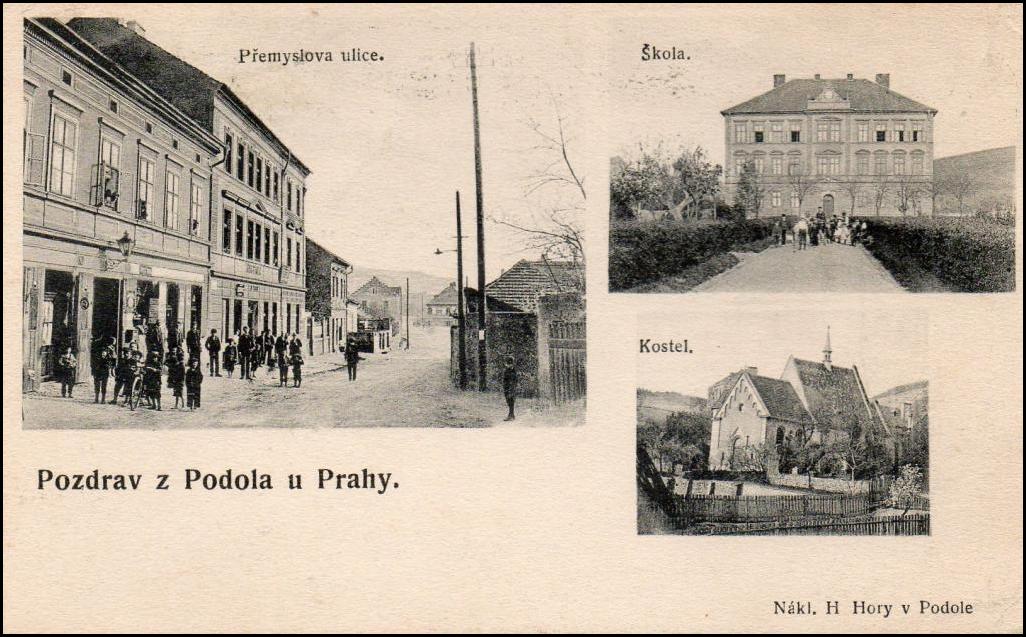
Podolí
has been a district of Prague since 1922. It is located on the eastern bank of the Vltava between Vyšehrad to the north and Braník to the south. To the east are Pankrác and Nusle. Until 1922, Podolí was administratively part of Vinohrady.
Demography
According to the 1910 census, Podolí had 4,048 inhabitants, of whom 4,032 (99 per cent) reported using Czech as their everyday language. The judicial district was okresNusle, administratively it reported to hejtmanstvíKrálovské Vinohrady.
Per the recruitment districts, infantrymen from Podolí were usually assigned to Infanterieregiment Nr. 28 (Prag) or k.k. Landwehrinfanterieregiment Nr. 8 (Prag).
Quote(s) from the novel
[I.3] Votevřel si klíčem podolskej kostelík, poněvadž myslel, že je doma, zul se v sakristii, poněvadž myslel, že je to u nich ta kuchyně, a lehl si na voltář, poněvadž myslel, že je doma v posteli, a dal na sebe nějaký ty dečky se svatými nápisy a pod hlavu evangelium a ještě jiný svěcený knihy, aby měl vysoko pod hlavou.
[II.3] Zkroucené postavy smažených mřínků svědčí o tom, že umírajíce protestují proti tomu, aby byli v Podole smaženi zaživa na margarinu. Hnát krocana...
Kladno
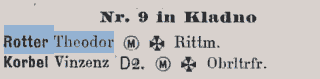
is partly a theme in Švejk's story about Rittmeister Rotter who set his dogs on tramps. The same story reappears during Švejk's stay at Švarcenberský ovčín, but now it is told by a tramp.
Background
Kladno
is an industrial city west of Prague and was a vital hub of the labour movement even under Austria-Hungary. It was from here that a failed Communist coup and general strike were organised in December 1920. Jaroslav Hašek was intended by Komintern to play a role in it, but arrived a few days after the coup had been put down.
Rotter in Kladno
The aforementioned Rittmeister Rotter actually served in Kladno as head of Gendarmerieabteilung Nr. 9 for a period in 1909 and 1910, and during this time he experimented with the use of dogs in the police force. Curiously, Josef Lada claims that he and Hašek visited Rotter in Kladno on 28 June 1914[a], but at the time Rotter had lived in Písek at least since 1911[b].
Demography
According to the 1910 census, Kladno had 19,369 inhabitants, of whom 18,732 (96 per cent) reported using Czech as their everyday language. The judicial district was okresKladno, administratively it reported to hejtmanstvíKladno.
Per the recruitment districts, infantrymen from Kladno were usually assigned to Infanterieregiment Nr. 28 (Prag) or k.k. Landwehrinfanterieregiment Nr. 8 (Prag).
Quote(s) from the novel
[I.3] Taky vám dám příklad, jak se na Kladně zmejlil jeden policejní pes, vlčák toho známého rytmistra Rottera.
[II.2] "Voní ho měli i dřív," ozval se vandrák, "já pamatuju, že na Kladně bejval četnickým rytmistrem nějakej pan Rotter.
Kladensko
is part of the anecdote about Rittmeister Rotter and his police dogs and the experiments with letting the dogs chase tramps.
Background
Kladensko
is the Czech name for the Kladno district west of Prague. Jaroslav Hašek visited the area on 28 June 1914 together with Josef Lada. See Kačák for more information.
Kladensko was probably a term that was synonymous with hejtmanstvíKladno, a region with 80,785 inhabitants distributed across the two judicial districts Kladno and Unhošť, totalling 45 local communities (1913)[a].
Quote(s) from the novel
[I.1.3] Taky vám dám příklad, jak se na Kladně zmejlil jeden policejní pes, vlčák toho známýho rytmistra Rottra. Rytmistr Rotter pěstoval ty psy a dělal pokusy s vandráky, až se Kladensku počali všichni vandráci vyhejbat.
[II.2] Tak dal rozkaz, aby četnictvo po celým Kladencku sbíralo houževnatě vandráky a dodávalo je přímo do jeho rukouch.
[II.2] Vzal jsem to k údolí Kačáku do lesů, do jedný rokle, a za půl hodiny byli už dva ty vlčáci u mne, povalili mne, a zatímco jeden mne držel za krk, ten druhej běžel do Kladna, a za hodinu přišel sám pan rytmistr Rotter ke mně s četníky, zavolal na psa a dal mně pětikorunu a povolení, že můžu po celý dva dny na Kladencku žebrat. Ale kdepak já, běžel jsem, jako když mně hlavu zapálí, na Berounsko a víckrát jsem se na Kladencku neukázal.
Pacific Ocean
briefly enters the story when the commission of court doctors ask Švejk how deep the Pacific is at its deepest. In [III.3], the ocean is mentioned again in the anecdote about Josef Koudela.
Background
Pacific Ocean
is the largest of the world's oceans and also the deepest ocean on earth. The point Švejk is asked about is the 10,911 metres deep Mariana Trench.
In 1914, fighting occurred in the Pacific and Germany was soon forced to abandon her colonies there, almost without bloodshed. At the outbreak of war, the German "Pacific Fleet" (Ostasiengeschwader) was ordered to sail home, but nearly all the ships were sunk on the way. Austria-Hungary had one vessel in the Pacific. SMS Kaiserin Elisabeth was sunk by its own crew on 2 November 1914 during the Japanese siege of the German navy base Tsingtao.
Quote(s) from the novel
[I.3] Soudní lékaři podívali se významně na sebe, nicméně jeden s nich dal ještě tuto otázku: „Neznáte nejvyšší hloubku v Tichém oceáně?“
„To prosím neznám,“ zněla odpověď, „ale myslím, že rozhodně bude větší než pod vyšehradskou skálou na Vltavě.“
Kolem 1880. Pohled na Vyšehradskou skálu s částí opevnění a s Libušinou lázní. Na břehu domek převozníka.
Vyšehrad is mentioned 4 times in The Good Soldier Švejk.
Vyšehrad
enters the dialogue when Švejk answers the psychiatric commission that Pacific Ocean must be deeper than the Vltava below Vyšehrad. In Part Two, Švejk mentions the district in a couple of anecdotes. See Božetěchova ulice and Neklanova ulice.
Background
Vyšehrad
is the oldest part of Prague, known for the historic fortress. It is located on a rock by the Vltava, between the current districts of Nové město and Nusle. The national cemetery is also located here.
In 1913, this city district was identical to the VI. district of the royal capital, officially called Královský Vyšehrad.
Demography
According to the 1910 census, Vyšehrad had 5,252 inhabitants, of whom 5,210 (99 per cent) reported using Czech as their everyday language.
[I.3] Soudní lékaři podívali se významně na sebe, nicméně jeden s nich dal ještě tuto otázku: „Neznáte nejvyšší hloubku v Tichém oceáně?“ „To prosím neznám,“ zněla odpověď, „ale myslím, že rozhodně bude větší než pod vyšehradskouskálou na Vltavě.“
[II.2] V Božetěchově ulici na Vyšehradě jeden rozzuřenej otec, který myslel, že si z něho úřady dělají legraci, pověsil tu medalii na záchod a jeden policajt, který s ním měl na pavlači ten záchod společnej, udal ho pro velezrádu, a tak si to ten chudák odskákal.
[II.3] "Z toho tě, Vodičko, vyvedu. Víš, kde je na Vyšehradě Neklanova ulice? Tam měl dílnu zámečník Voborník.
[II.4] Mladší sestra že se utopila, starší že se vrhla pod vlak, bratr že skočíl z železničního mostu na Vyšehradě, dědeček že zavraždil svou ženu a polil se petrolejem a zapálil se, ...




 czdeenitlannno
SearchMap
czdeenitlannno
SearchMap