The Good Soldier Švejk mentions numerous institutions and firms, both public and private. Until 15 September 2013, these were categorised as
'Places' on these pages. That categorisation only partly makes sense, because this type of entity cannot always be
tied to geographical coordinates in the way that cities, mountains, and rivers can. This page therefore covers
military and civilian institutions (including army units, regiments, etc.), organisations, hotels, public houses,
newspapers, and magazines.
The boundary between this page and 'Places' is not always clear-cut. Churches, for instance, rarely change location
yet are still included here. By contrast, Prague and Vienna remain in the 'Places' database because they have fixed
coordinates. Institutions, however, may move: Odvodní komise and Bendlovka are not unambiguous geographical terms,
so they are listed on this page.
The names are colour-coded according to their role in the novel, as illustrated by the following examples:
U kalicha, a location where the plot takes place.
k.u.k. Kriegsministerium, mentioned in the narrative.
Kostel svatého Apolináře
is mentioned in the narrative because the church servant from here was at U kalicha when Švejk dropped by the pub after his final release from c.k. policejní ředitelství. This was probably on 29 July 1914, as Austria-Hungary had just declared war on Serbia.
Background
Kostel svatého ApolinářeChurch of Saint Apollinaire
is a church in Nové město located only a few hundred metres from U kalicha. It was built in the 15th century and named after Apollinaris of Ravenna.
Quote(s) from the novel
[I.6] Ve výčepu panovalo hrobové ticho. Sedělo tam několik hostů, mezi nimi kostelník od sv. Apolináře.
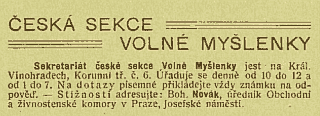
Volná myšlenka
is mentioned when pubkeeper Palivec cries out in court: "Long live Free thought!". This is what Mrs. Palivcová tells Švejk when he returns to U kalicha after having been released at the time the war broke out.
Background
Volná myšlenka
was an association of freethinkers, an anticlerical and atheist movement that appeared in many countries in the 19th century. The best-known freethinker internationally was Francesc Ferrer i Guàrdia (1859-1909).
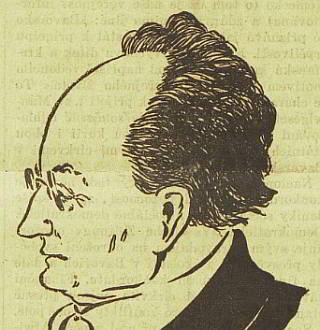
The Czech organisation was founded in 1904 and provisionally dissolved in 1915. The best-known representative of the Czech organisation was Machar, chairman from 1909. The organisation also published a monthly periodical of the same name. Their most immediate goal was the separation of state and church.
Karel Pelant (1874–1925) was one of the founders of the Czech section, and this was a person Hašek knew well. Zdeněk Matěj Kuděj describes a meeting between the two in Plzeň in 1913 that was arranged because Pelant, at the time editor of the weekly Směr, owed Hašek money for a few stories he had written.
Pelant also appears in Strana mírného pokroku v mezích zákona and is listed as the publisher of the Freethinkers' monthly.
Quote(s) from the novel
[I.6] Já jsem se tak lekla toho příbuzenského poměru, aby snad ještě z toho něco nebylo, tak jsem se vzdala svědectví a on chudák stará se tak na mne podíval, do smrti na ty jeho oči nezapomenu. A potom, po rozsudku, když ho odváděli, vykřik jim tam na chodbě, jak byl z toho cele] pitomej: ,Ať žije Volná myšlenka!`
20.7.1936 • Celkový pohled na dům čp. 496 na Starém Městě v Havelské ulici z výšky.
Národní listy,27.2.1913
Prager Tagblatt,29.3.1913
In editions published after around 1950, the spelling is changed to Mimoza.
Mimosa
is mentioned because the doorman who had occupied Švejk's room worked here.
Background
Mimosa
was a night café in Staré město that no longer exists. In the 1910 address book, another café is listed at number 496/31: U Hvězdičky tři zlaté.
From February 1913, adverts reveal that Mimosa was now established on the premises[a]. The owner was Antonín Růžicka, and on offer were live music, dancing, entertainment, food, and Pilsner Urquell on tap. The establishment also advertised around-the-clock opening hours[b].
In February 1917, Čech reported that the establishment had been forced to close down on demand from the police[c]. In 1936, just before the building was demolished, a Café Eldorado existed on the former premises of Mimosa.
Quote(s) from the novel
[I.6] Když si bral límeček a skládal kravatu, vzpamatoval se již do té míry, že mohl ujistit Švejka, že noční kavárna „Mimosa“ jest opravdu jedna z nejslušnějších nočních místností, kam mají přístup jedině dámy, které mají policejní knížku v úplném pořádku, a zval Švejka srdečně, aby přišel na návštěvu.




 czdeen
SearchMapŠvejkův slovník
czdeen
SearchMapŠvejkův slovník