The Good Soldier Švejk mentions numerous institutions and firms, both public and private. Until 15 September 2013, these were categorised as
'Places' on these pages. That categorisation only partly makes sense, because this type of entity cannot always be
tied to geographical coordinates in the way that cities, mountains, and rivers can. This page therefore covers
military and civilian institutions (including army units, regiments, etc.), organisations, hotels, public houses,
newspapers, and magazines.
The boundary between this page and 'Places' is not always clear-cut. Churches, for instance, rarely change location
yet are still included here. By contrast, Prague and Vienna remain in the 'Places' database because they have fixed
coordinates. Institutions, however, may move: Odvodní komise and Bendlovka are not unambiguous geographical terms,
so they are listed on this page.
The names are colour-coded according to their role in the novel, as illustrated by the following examples:
U kalicha, a location where the plot takes place.
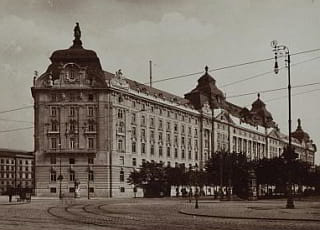
k.u.k. Kriegsministerium, mentioned in the narrative.
Kriegsministerium
* Drill oder Erziehung vart gjeve ut av L.W Seidel & Sohn, ikkje av Kriegsministerium. Forfattaren var Johann Orth.
is mentioned by the author when he informs that the ministry remembered Švejk at the time when the Austrians were fleeing across Raba, and that Švejk was to help them out of the difficult situation.
The ministry appears again at the start of [I.13] when Feldkurat Katz receives a directive about how to administer the last rites. In [II.1], the author notes that the ministry issued the propaganda posters that Švejk read at the station in Tábor (see Trainsoldat Bong and Zugsführer Danko).
When Einjährigfreiwilliger Marek describes Fähnrich Dauerling, the ministry is mentioned twice. They allegedly published the book Drill oder Erziehung*, and Marek also claims that this is where the most stupid officers end up.
* Drill oder Erziehung was published by L.W Seidel & Sohn, not by Kriegsministerium. The author was Johann Orth.
Background
KriegsministeriumWar Ministry
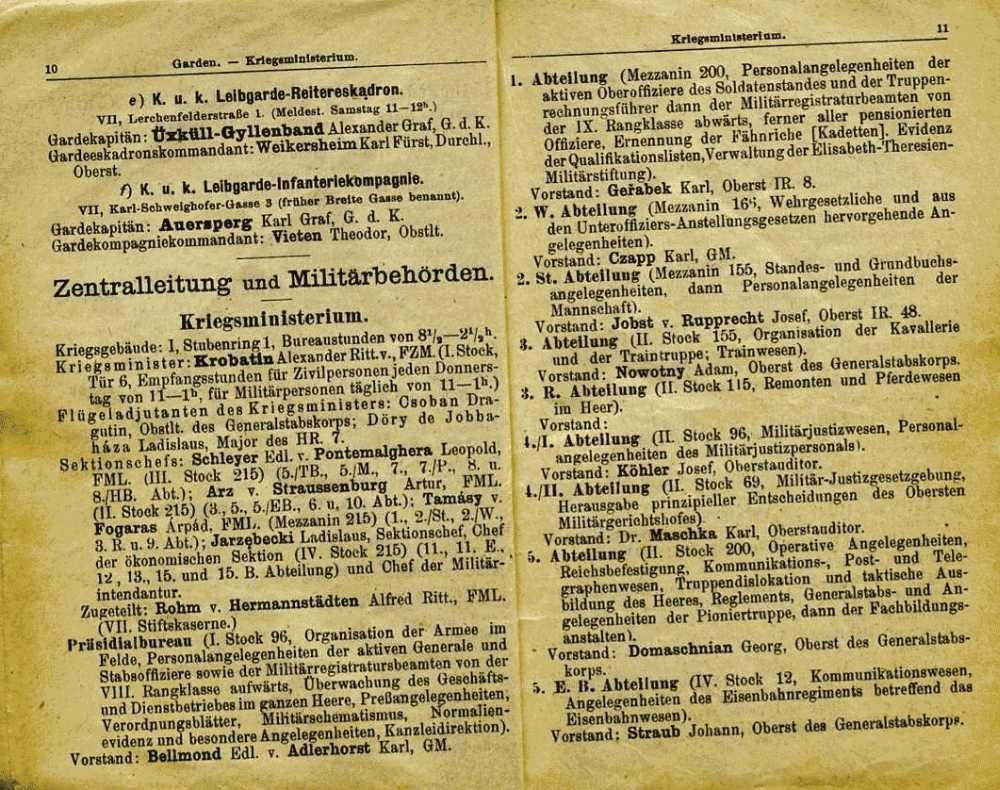
was the common ministry of war of Austria-Hungary, one of the three ministries shared by the two constituent parts of the Dual Monarchy. The Minister of War from 1912 until 1917 was Alexander von Krobatin. He was regarded as one of the hawks who wanted to settle scores with Serbia at the slightest pretext. As can be seen in the picture, he gave audience to civilians two hours every week.
The War Ministry was not responsible for k.k. Landwehr and Honved, the territorial armies of the two parts of the empire. The formal status Švejk held concerning the ministry is unclear. He was classified as Landsturm (domobranec), reservists who were only called up when the motherland was in great danger.
Quote(s) from the novel
[I.7] V době, kdy lesy na řece Rábu v Haliči viděly utíkat přes Ráb rakouská vojska a dole v Srbsku rakouské divise jedna za druhou dostávaly přes kalhoty to, co jim dávno patřilo, vzpomnělo si rakouské ministerstvo vojenství i na Švejka, aby pomohl mocnářství z bryndy.
[I.13] Polní kurát Otto Katz seděl zadumané nad cirkulářem, který právě přinesl z kasáren. Byl to rezervát ministerstva vojenství
[I.15] Zatraceně, proč ministerstvo vojenství dává takové věci do školního programu. To je přece pro dělostřelectvo.
[II.1] Strážnice byla vyzdobena litografiemi, které v té době dalo rozesílat ministerstvo vojenství po všech kancelářích, kterými procházeli vojáci, stejně jako do škol i do kasáren.
[II.2] A seshora ho bombardovali přípisy, ve kterých ministerstvo zemské obrany poukazovalo, že z píseckého okresu podle zpráv ministerstva vojenství přecházejí k nepříteli.
[II.2] Jeho hloupost byla tak oslňující, že byla největší naděje, že snad po několika desetiletích dostane se do tereziánské vojenské akademie či do ministerstva vojenství.
[II.2] Jednoroční dobrovolník si oddechl a vypravoval dál: „Vyšla nákladem ministerstva vojenství kniha ,Drill oder Erziehung’, ze které vyčetl Dauerling, že na vojáky patří hrůza.
[II.3] Že psaní pošle na velitelství pluku, do ministerstva vojenství, uveřejní je v novinách.
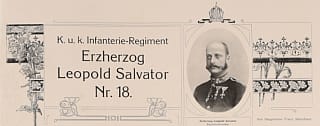
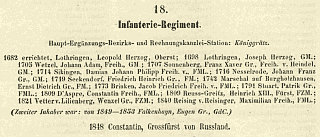
Infanterieregiment Nr. 18
is mentioned in the song Jenerál Windischgrätz a vojenští páni through the term "the eighteenth band". See Solferino and Piedmont.
Background
Infanterieregiment Nr. 18
was recruited from the Hradec Králové district and took part in nearly every war the Habsburg empire fought since the regiment was founded in 1682.
The theme of the song is the battle of Solferino that decided the outcome of the Second Italian War of Independence in 1859. During the battle, only the regiment's 4th battalion was involved; the other battalions were fortunate enough to be assigned border duty.
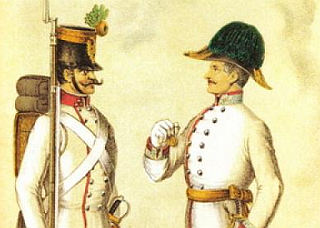
In 1914, the bulk of the regiment's soldiers were Czechs (75 per cent), the rest Germans.
An alternative version
Václav Pletka claims that the "18th gang" refers to a Feldjägerbataillon from Prague that was dissolved in 1893[a]. This seems, however, unlikely, as none of the 29 Jäger-Bataillone were garrisoned in Prague in 1859. Feldjägerbataillon Nr. 18 was located in Krumau, but it remains to be investigated whether it participated at Solferino.
The Good Soldier Švejk in Captivity
Some verses of the song about General Windischgrätz are also quoted in Dobrý voják Švejk v zajetí and in a context that is very similar.[1]
Quote(s) from the novel
[I.7]
Krve po kolena a na fůry masa,
vždyť se tam seka vosumnáctá chasa,
hop, hop, hop!
Adresář královského hlavního města Prahy a obcí sousedních,1907
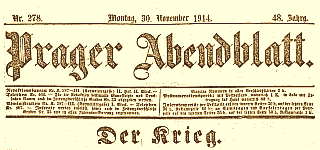
Prager Abendblatt,30.11.1914
Prager Tagblatt,5.7.1914
Prager Tagblatt,8.9.1914
Pražské úřední noviny
prints a glowing homage to the patriotic cripple Švejk after he was pushed to the recruitment board in a wheelchair. The title was: "Patriotism of a cripple".
Background
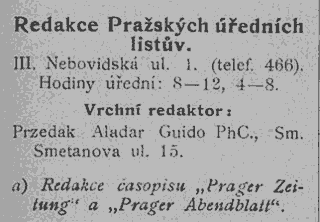
Pražské úřední novinyPrague Official Newspaper
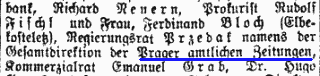
is not listed in the newspaper section of the address books of 1907 and 1910, but there is little doubt that the author refers to one of the publications of c.k. Místodržitelství (k.k. Statthalterei). The common term for the newspapers was Pražské úřední listy in German Prager Amtsblätter. The newspapers were the mouthpieces of the Austrian authorities in Bohemia, headed by the Statthalter (Governor).
The main organ was published in both German (Prager Zeitung) and Czech (Pražské Noviny) and it is probably the latter the author has in mind. Both were morning papers that were published every day except Monday. On weekdays, a supplement containing official announcements was included, called Úřední list Pražských Novin and Amtsblatt der Prager Zeitung respectively. On Sundays, an entertainment magazine was added. The evening newspaper Prager Abendblatt was published on weekdays, but in German only.
The editorial offices were located in Malá Strana, right behind Kampa island[a]. Some time between 1907 and 1910, they changed address but were still in the same block. Editor-in-chief for all the papers was Aladar Guido Przedak, for the Czech part Jan Svátek. Przedak (1857–1926) was the chief editor from 1900 until 1918 and also bore the title k.u.k. Regierungsrat. The circulation of Prager Abendblatt was quintupled during his tenure as editor[b].
Quote(s) from the novel
[I.7] O celé této události objevil se v „Pražských úředních novinách“ tento článek:
[I.7]Vlastenectví mrzáka. Včera dopoledne byli chodci na hlavních pražských třídách svědky scény, která krásně mluví o tom, že v této veliké a vážné době i synové našeho národa mohou dáti nejskvělejší příklady věrnosti a oddanosti k trůnu stařičkého mocnáře. Zdá se nám, že se vrátily doby starých Řeků a Římanů, kdy Mucius Scaevola dal se odvésti do boje, nedbaje své upálené ruky. Nejsvětější city a zájmy byly včera krásně demonstrovány mrzákem o berlích, kterého stará matička vezla na vozíku pro nemocné. Tento syn českého národa dobrovolně, nedbaje své neduživosti, dal se odvésti na vojnu, aby dal svůj život i statky za svého císaře. A jestli jeho volání „Na Bělehrad!“ mělo tak živý ohlas v pražských ulicích, jest to jen svědectvím, že Pražané skýtají vzorné příklady lásky k vlasti a k panovnickému domu.
[I.8] Zatímco jsem seděl, děly se v kasárnách divy. Náš obršt zakázal vojákům vůbec číst, třebas by to byly ,Pražské úřední noviny’, v kantině nesměli balit do novin ani párky, ani syrečky. Vod tý doby vojáci začli číst a náš regiment byl nejvzdělanější.
Prager Tagblatt
briefly notes that Švejk was protected by Germans against Czech agents from the Entente who wanted to lynch him on his way to Střelecký ostrov.
The newspaper features again in connection with the theft of Fox. The dog's owner, Oberst Kraus, placed adverts both here and in Bohemia where he promised a reward of 100 crowns.
Background
Prager Tagblatt
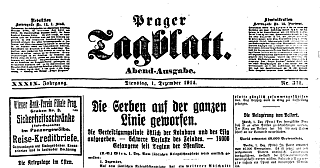
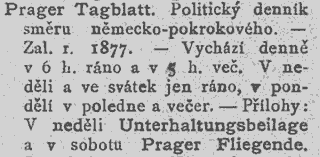
was a German-language daily published in Prague from 1877 until 1939. The paper had a reputation for outstanding journalistic qualities and was regarded as one of the very best German-language newspapers of its time. It was over the years associated with a number of distinguished writers, among them MaxBrod, Egon Erwin Kisch, Josef Roth, Michal Mareš, and FriedrichTorberg. Franz Kafka was also among those who contributed to the newspaper, and he was also an avid reader of it.
During World War I, the paper aligned with the propaganda but was often the victim of censorship, and put more emphasis on the human costs of the war than many other papers. In the inter-war years, the daily re-established its reputation for journalistic excellence, but hardly two months after the German invasion in March 1939, it was closed for good. The numerous Jewish staff had been dismissed already during the days after the invasion.
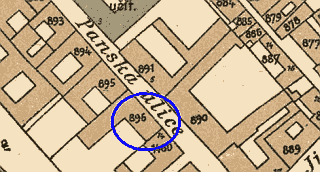
Politically, it was regarded as liberal-democratic, and in Czech address books it is listed as "German progressive". Chief editor in 1910 was Gustav Horn. The editorial and administration offices were located in Panská ulice (Herrengasse)[c], incidentally very close to where Oberst Kraus caught Oberleutnant Lukáš red-handed with the stolen Fox.
Prager Tagblatt and Hašek
After Jaroslav Hašek's death on 3 January 1923, Prager Tagblatt played a major role in acknowledging and spreading the word about the late author and his satirical masterpiece. This was largely thanks to MaxBrod, a writer and journalist who is better known as the custodian of Franz Kafka's literary heritage.
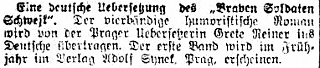
Already on 5 January, the paper printed an obituary[a], and Brod's own translation of the first chapter of The Good Soldier Švejk appeared in the same issue[b]. During the next fifteen years, Švejk and Hašek showed up repeatedly in the newspaper's columns, particularly in 1926 when the full translation into German by Grete Reiner was published. At least seven of Hašek's short stories (translated into German) were printed in Prager Tagblatt in the years after the author's death.
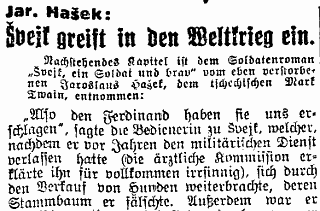
Švejk greift in den Weltkrieg ein (Max Brod)
"Also den Ferdinand haben die uns erschlagen", sagte die Bedienerin zu Švejk, welcher, nachdem er vor Jahren den militärischen Dienst verlassen hatte (die ärtztliche Kommission erklärte ihn für vollkommen irrsinnig), sich durch den Verkauf von Hunden weiterbrachte, deren Stammbaum er fälschte.
The Good Soldier Švejk in Captivity
In Dobrý voják Švejk v zajetíPrager Tagblatt is also mentioned but in a differnt setting. In Švejk's cell at c.k. policejní ředitelství was sitting a higher official from the governor's office who had been arrested in front of their editorial offices in Panská ulice.[1]
Velmi zamyšleně se tvářil pán v prostředních letech, velmi slušně oděný, který se včera dostal do chumlu před Prager Tagblattem v Panské ulici. Někdo ho zatkl, radu od místodržitelství, omdlel jim rozčilením, dopravili ho na policejní ředitelství v truhle a pak našli u něho v kapse nějaké kamení. Ještě ho nevyslechli. Domnívají se, že chtěl vytlouci Prager Tagblatt, on, místodržitelský rada, který nečte kromě úředního deníčku jiných novin než Prager Tagblatt, za manželku má Němkyni a …
Quote(s) from the novel
[I.7] Ve stejném smyslu psal i „Prager Tagblatt“, který končil svůj článek slovy, že mrzáka dobrovolce vyprovázel zástup Němců, kteří ho svými těly chránili před lynchováním ze strany českých agentů známé Dohody.
[I.15] „Pane nadporučíku,“ pokračoval plukovník, „považujete za správné jezdit na ukradeném koni? Nečetl jste inserát v ,Bohemii’ a v ,Tagblattu’, že se mně ztratil stájový pinč?
[I.15] V tiché resignaci seděl nadporučík na židli a měl takový pocit, že nemá tolik síly nejen dát Švejkovi pohlavek, ale dokonce ukroutit si cigaretu, a sám nevěděl ani, proč posílá Švejka pro „Bohemii“ a „Tagblatt“, aby si Švejk přečetl plukovníkův inserát o ukradeném psu.
Adresář královského hlavního města Prahy a obcí sousedních,1907
Ferdinand Mestek de Podskal, E.E. Kisch
Bohemia,5.7.1914
Bohemia
published an article that resembled the one from Prager Tagblatt about the cripple Švejk and his journey in a wheelchair. It adds that gifts for the benefit of the soldier can be presented at the administrative office. In the next chapter, it becomes clear that it was in this paper that Baronesse von Botzenheim read about the keen soldier.
In [I.14], the newspaper is mentioned again as Oberst Kraus placed an advert about the missing dog and offered a reward of 100 crowns.
Bohemia
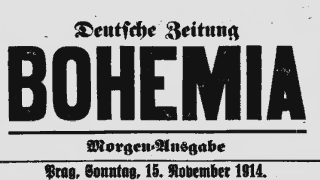
was a German-language daily published in Prague from 1828 until 1938, associated with the German Liberal Party. During the war, they took a strongly patriotic stance, and from 15 November 1914 even changed the name to Deutsche Zeitung Bohemia. The editorial and administration offices were located in Liliová ulice in Staré město, and chief editor in 1914 was Andreas Haase. He held the position for an impressive 40 years, from 1879 to 1919.
E.E. Kisch
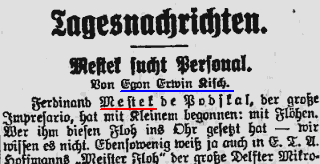
Their best-known reporter was without doubt the legendary Egon Erwin Kisch. He worked for the paper from 1906 to 1913 and published many reports from Prague, often focused on the shady underworld. Kisch dedicated a feuilleton to flea circus director Mestek, mentions murderer Valeš and negro Kristian, and wrote about a number of watering holes that are familiar to readers of The Good Soldier Švejk: Apollo, Tunel, U Kocanů, Montmartre, U Brejšky, among others.
Quote(s) from the novel
[I.7] „Bohemie“ uveřejnila tuto zprávu žádajíc, aby mrzák vlastenec byl odměněn, a oznámila, že pro neznámého přijímá od německých občanů dárky v administraci listu.
[I.15] „Pane nadporučíku,“ pokračoval plukovník, „považujete za správné jezdit na ukradeném koni? Nečetl jste inserát v ,Bohemii’ a v ,Tagblattu’, že se mně ztratil stájový pinč?
[I.15] V tiché resignaci seděl nadporučík na židli a měl takový pocit, že nemá tolik síly nejen dát Švejkovi pohlavek, ale dokonce ukroutit si cigaretu, a sám nevěděl ani, proč posílá Švejka pro „Bohemii“ a „Tagblatt“, aby si Švejk přečetl plukovníkův inserát o ukradeném psu.
[II.1] Nadporučíkovi bezděčně zacvakaly zuby, vzdychl si, vytáhl z pláště „Bohemii“ a četl zprávy o velkých vítězstvích, o činnosti německé ponorky „E“ na Středozemním moři...
Overview of Landsturm medical examination boards in Prague
Čech,8.11.1914
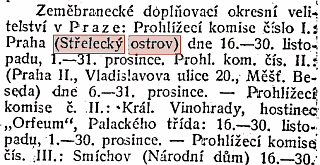
Odvodní komise
is the Czech name for recruitment board, the body that examined Švejk at Střelecký ostrov. Head of the commission was the infamous Doctor Bautze.
Background
Odvodní komiseRecruitment board
refers in this context to Landsturmmusterungskommision No. 1, a temporary body that was tasked with carrying out medical examinations of Landsturm recruits who in peacetime had either been declared unfit for armed service (waffenunfähig) or had been dismissed from the armed forces after initially having started their military service (superarbitriert).
Commission no. 1, located at Střelecký ostrov, was responsible for recruits who lived in Prague and had Heimatrecht in the city. In addition, it examined residents of Prague with right of domicile elsewhere, if these were born from 1878 to 1883. Jaroslav Hašek belonged to the latter group (right of domicile Mydlovary, born 1883) and necessarily also Švejk. As a soldier in Infanterieregiment Nr. 91, his right of domicile must have been in Heeresergänzungsbezirk Nr. 91. See Ergänzungskommando.
The commission started the examinations on 1 October 1914 when those born from 1892 to 1894 were called in. Among this group, more than half were deemed fit for service. From 16 November to 31 December, it was the turn of those born from 1878 to 1890. Among this group, far fewer were passed as capable, Tauglich, less than one-third. This latter group is the most interesting for us, as it was here that Jaroslav Hašek fitted in. Everything indicates that Švejk also belonged to this group and was thus born between 1878 and 1883. On 20 January 1915, it was announced that Austrian citizens who were passed fit for duty had to report at their Ergänzungskommando on 15 February.
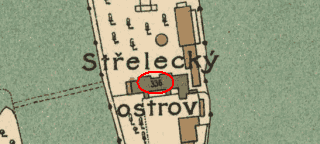
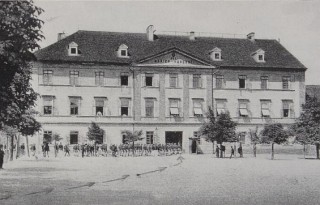
The examinations took place in the garden restaurant at Střelecký ostrov, on the southern part of the island. The restaurant was a popular destination in 1914.
Quote(s) from the novel
[I.7] Když Švejk revírnímu inspektorovi ukázal, že to má černé na bílém, že dne musí před odvodní komisi, byl revírní inspektor trochu zklamán; kvůli zamezení výtržnosti dal doprovázet vozík se Švejkem dvěma jízdními strážníky na Střelecký ostrov.




 deit
SearchMapŠvejkův slovník
deit
SearchMapŠvejkův slovník