The Good Soldier Švejk mentions numerous institutions and firms, both public and private. Until 15 September 2013, these were categorised as
'Places' on these pages. That categorisation only partly makes sense, because this type of entity cannot always be
tied to geographical coordinates in the way that cities, mountains, and rivers can. This page therefore covers
military and civilian institutions (including army units, regiments, etc.), organisations, hotels, public houses,
newspapers, and magazines.
The boundary between this page and 'Places' is not always clear-cut. Churches, for instance, rarely change location
yet are still included here. By contrast, Prague and Vienna remain in the 'Places' database because they have fixed
coordinates. Institutions, however, may move: Odvodní komise and Bendlovka are not unambiguous geographical terms,
so they are listed on this page.
The names are colour-coded according to their role in the novel, as illustrated by the following examples:
U kalicha, a location where the plot takes place.
k.u.k. Kriegsministerium, mentioned in the narrative.
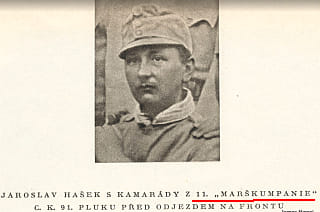
An example of the confusion caused by the term march company in the early years of Hašek research.
Jaroslav Hašek ve fotografii,1959
11. Marschkompanie
becomes the setting of the plot in [II.5] in Királyhida, but the unit had already been mentioned earlier, using the more ambiguous term 11. Kompanie. The author freely mixed the terms 11th company and 11. Marschkompanie, but from the context in The Good Soldier Švejk, it is clear that he always meant the MK-11.
The commander of the company is Oberleutnant Lukáš, who had, in his own words, "inherited" the company, although it is unclear from whom. The company belonged to an unspecified march battalion commanded by Hauptmann Ságner.
Background
11. Marschkompanie
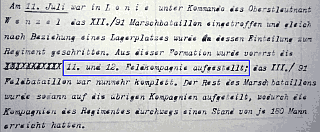
never existed as a unit in Infanterieregiment Nr. 91 in 1915. The number eleven is borrowed from 11. Feldkompanie, in which Hašek served as a soldier from 11 July until 24 September 1915. From 1 June until arriving at the front, he belonged to the 4th March company of XII. Marschbataillon of IR91. Like most other march units, it was dissolved soon after arriving at the front, and the men were distributed among the various field companies.
Confusion of terms
Early experts on Hašek, such as Zdena Ančík, believed that because Švejk served in the 11. Marschkompanie, the same must necessarily have been true for his creator.
Quote(s) from the novel
[II.5] Nadporučík Lukáš chodil rozčileně po kanceláři 11. maršové roty. Byla to tmavá díra v baráku roty, přepažená z chodby prkny. Stůl, dvě židle, baňka s petrolejem a kavalec.
[II.5] To je jedenáctá marškumpanie, kterou jsem zdědil. Co z nich mohu udělat? Jak si budou počínat v opravdovém gefechtu?
[II.5] Vypravoval nedávno štábsfeldvébl Hegner, že příliš neladíte s panem hejtmanem Ságnerem a že on právě pošle naši 11. kumpačku první do gefechtu na ta nejhroznější místa."
[II.5] Nadporučík Lukáš otočil se na židli ke dveřím a zpozoroval, že se dveře pomalu a tiše otvírají. A stejné tak tiše vstoupil do kanceláře 11. marškumpanie dobrý voják Švejk, salutuje již ve dveřích a patrně již tenkrát, když klepal na dveře, dívaje se na nápis "Nicht klopfen!"
[II.5] Švejk pohyboval se tak volně společensky v kanceláři 11. marškumpanie, jako by byl s Vaňkem nejlepším kamarádem, na což účetní šikovatel reagoval prostě slovy: "Položte to na stůl."
[II.5] Já jsem totiž zde ordonanc," řekl hrdě dodatkem, "pan obršt Schröder mě sem přidělil k 11. marškumpačce k panu obrlajtnantovi Lukášovi, u kterého jsem byl pucflekem, ale svou přirozenou inteligencí jsem byl povýšenej na ordonanc.
[II.5] Kdo je u telefonu? Ordonanc od 11. marškumpanie. Kdo je tam? Ordonanc od 12. maršky? Servus, kolego. Jak se jmenuji? Švejk. A ty? Braun.
[II.5] Během celé té doby, kdy nadporučík Lukáš stal se velitelem jedenácté marškumpačky, ocitl se ve stavu zvaném synkretismus, to jest ve filosofii, že usiloval rozpory pojmové vyrovnávati pomocí ústupků až k smíšení názorů.
The unit was already mentioned in the previous chapter, using the more ambiguous term 10. Kompanie.
Background
10. Marschkompanie
never existed as a unit in Infanterieregiment Nr. 91 in 1915. The number ten is undoubtedly borrowed from 10. Feldkompanie, a pattern that repeats with all the companies from IR91 mentioned in The Good Soldier Švejk.
Rechnungsfeldwebel Vaněk also claims that Hauptmann Ságner took part in the operations near Dukla. This may have been true for Hašek's literary character, but not for his real-life counterpart Čeněk Sagner. The latter was wounded in Serbia in November 1914 and did not return to front-line duty until June 1915, and then much further east, in the area south of Lemberg.
Quote(s) from the novel
[II.5] Účetní šikovatel si vzdychl: „Já bych byl toho náhledu, že v takové válce, jako je tahle, kdy je tolik vojska a taková dlouhá fronta, že by se spíš mohlo docílit víc jenom pořádným manévrováním nežli nějakými zoufalými ataky. Já to viděl pod Duklou při 10. marškumpačce. Tenkrát se to všechno odbylo úplně hladce, přišel rozkaz ,Nicht schießen’, a tak se nestřílelo a čekalo, až se Rusové přiblížili až k nám. Byli bychom je zajali bez výstřelu, jenomže tenkrát měli jsme vedle sebe na levém flanku ,železné mouchy’, a ti pitomí landveráci tak se lekli, že se k nám Rusové blíží, že se začali spouštět dolů ze strání po sněhu jako na klouzačce, a my jsme dostali rozkaz, že Rusové protrhli levý flank, abychom se hleděli dostat k brigádě. Já byl tenkrát právě u brigády, abych si dal potvrdit kompanieverpflegungsbuch, poněvadž jsem nemohl najít náš regimentstrain, když vtom začnou k brigádě chodit první z 10. maršky. Do večera jich přišlo sto dvacet, ostatní prý po sněhu sjeli, jak při ústupu zabloudili, někde do ruských štelungů, jako by to byl tobogan. Tam to bylo hrozné, pane obrlajtnant, Rusové měli v Karpatech štelungy nahoře i dole. A potom, pane obrlajtnant, pan hejtman Ságner...“
[II.5] "Není žádný spěch, pane obrlajtnant. Když jsme měli ject s devátou marškumpanií, tak nás tahali celé čtyry dny za nos. S osmou jakbysmet. Jen s desátou to bylo lepší."
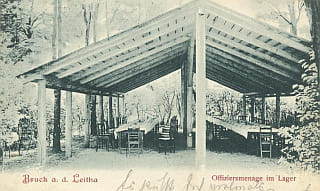
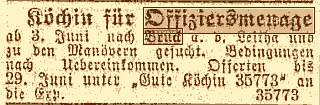
OffiziersmenageOfficers' mess
refers to officers' dining rooms in Brucker Lager. There is no doubt that it existed[a], perhaps there were several both in the old and the new camp. In this case, it would surely have been a mess in Altes Lager where Hašek himself served. We do not know where the mess(es) was located, but it would surely have been along Lagerallee or not far from it.
Quote(s) from the novel
[II.5] "Vybral jste mně opravdu znamenitého pucfleka," mluvil nadporučík Lukáš k účetnímu šikovateli, "děkuji vám srdečně za to milé překvapení. První den si ho pošlu pro oběd do oficírsmináže, a on mně ho půl sežere."
[II.5] Účetní šikovatel z dlouhé chvíle bubnoval si nějaký pochod, ale nemusel se dlouho nudit, neboť otevřely se dveře a vstoupil kuchař z důstojnické mináže Jurajda a přilepil se na jednu židli.
[II.5] Já vám chtěl telefonovat. - Že jsem byl v kantýně? Kdože to povídal? Ten okultista kuchař z oficírmináže?
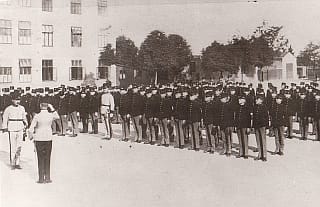
Bruck, Alte Wiener Straße - Landwehrkaserne ca.1915
K.u.k. Platzkommando, Wien,1913
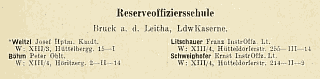
Brucker Einjährigfreiwilligenschule
is mentioned by Oberleutnant Lukáš when, in a conversation with Rechnungsfeldwebel Vaněk, he complains about having been given command of 11. Marschkompanie, a completely hopeless unit. It is also revealed that Hauptmann Ságner commanded the school during night exercises but got lost and only stopped when they reached the mud by Neusiedler See.
Background
Brucker EinjährigfreiwilligenschuleBruck One-Year Volunterr School
refers to the reserve officers' school in Bruck an der Leitha. It was located in Landwehrkaserne in the western part of town. The building is still intact and in 1983 it was occupied by council houses[b].
[IV.5] „Předevčírem při nachtübungu měli jsme, jak víte, manévrovat proti Einjährigfreiwilligen Schule za cukrovarem. První švarm, vorhut, ten šel ještě tiše po silnici, poněvadž ten jsem vedl sám, ale druhý, který měl jít nalevo a rozeslat vorpatroly pod cukrovar, ten si počínal, jako kdyby šel z výletu.
[IV.5] A to nevíte, pane obrlajtnant, že při tom posledním nachtiibungu, o kterém jste vypravoval, einjährigfreiwilligenschule, která měla naši kumpačku obejít, dostala se až k Neziderskému jezeru?
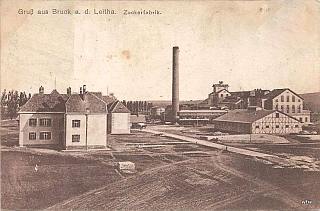
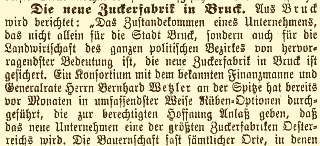
Brucker Zuckerfabrik
is mentioned by Oberleutnant Lukáš, through the term "sugar factory", when he tells Rechnungsfeldwebel Vaněk about some manoeuvres he took part in behind the factory.
Background
Brucker ZuckerfabrikBruck Sugar Factory
refers to a sugar factory in Bruck an der Leitha that started production in 1909. It was owned by Österreichischen Zuckerindustrie-Aktiengesellschaft until 1931 and had several owners throughout the years. Until it was closed in 1986, it remained one of the largest sugar refineries in Austria. Wolfgang Gruber and Erwin Sillaber have written a detailed history of the sugar factory[a]. Today, the building is occupied by a biodiesel factory.
Wolfgang Gruber
Trotz regionaler Widerstände und Schwierigkeiten entstand in Bruck im Jahre 1909 ein moderner Verarbeitungsbetrieb für Zuckerrüben. Die Brucker Zuckerfabrik wurde für die Ostregion südlich der Danube über Jahrzehnte zu einem wichtigen Arbeit- und Auftraggeber.
The Good Soldier Švejk in Captivity
The factory is also mentioned in Dobrý voják Švejk v zajetí but is erroneously placed in Királyhida.[1]
Jinak Királyhida je zaprášené město. Obyvatelé nevědí, jestli jsou Němci nebo Maďaři. Městské děvy pěstují flirt s důstojníky vojenského tábora z Brucku. Také tu kvete prostituce jako všude v Maďárii. Jsou tam jen dvě památnosti, zříceniny cukrovaru a vykřičený dům U kukuřičního klasu, který ráčil poctíti svou návštěvou arcivévoda Štěpán roku 1908 za velkých manévrů.
Quote(s) from the novel
[II.5] „Předevčírem při nachtübungu měli jsme, jak víte, manévrovat proti Einjährigfreiwilligen Schule za cukrovarem. První švarm, vorhut, ten šel ještě tiše po silnici, poněvadž ten jsem vedl sám, ale druhý, který měl jít nalevo a rozeslat vorpatroly pod cukrovar, ten si počínal, jako kdyby šel z výletu.
9. Marschkompanie
is mentioned by Rechnungsfeldwebel Vaněk when he tells Oberleutnant Lukáš about his experiences at the front. According to him, this company was the worst of them all and was, at one stage, captured as a unit together with its commander.
Background
9. Marschkompanie
never existed as a unit in Infanterieregiment Nr. 91 in 1915. The number nine is evidently borrowed from 9. Feldkompanie, a pattern that repeats itself with all the companies from IR. 91 that are mentioned in The Good Soldier Švejk.
Entire companies captured
That entire companies (approximately 180 men) were captured did not happen often with Infanterieregiment Nr. 91, but during the retreat from Serbia in December 1914, three companies "disappeared". According to Jan Eybl, the 5th, 14th and 15th companies were captured[a]. Hašek was surely aware of these events and may at least hypothetically have woven them into the novel.
Disaster in the Eastern Beskids
That said, events in Východní Beskydy on 22 March 1915 provide more solid clues. During a Russian attack in the early hours, large parts of 9. Infanteriedivision were caught in their sleep and captured. The worst hit were Infanterieregiment Nr. 91 and Infanterieregiment Nr. 73, and both regiments lost entire companies. III. Feldbataillon was nearly wiped out and three of its four companies were captured. These were the 9th, 10th and 12th, and the 11th was severely decimated. Who the commander of 9. Feldkompanie was at the time is not known. Jan Eybl noted that the "lieutenant of the company" and 20 men fell asleep on guard, and this lieutenant may well have been the company commander. 11. Feldkompanie was subjected to investigations after the battle and also on other occasions the company had come under scrutiny[b].
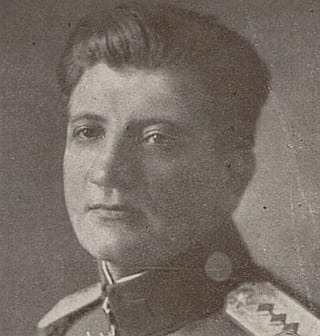
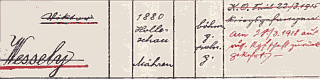
The Verlustliste of Infanterieregiment Nr. 91 for the 22nd and 23rd of March contains almost 600 names, and most of them are listed as "taken prisoner". Amongst those captured were the captains Franz Wild and Viktor Wessely, the lieutenants (Ladislav Kvapil and Viktor Dostal), and the reserve lieutenants (Karel Výška, Rudolf Förster, Josef Richter, and Johann Trapl)[c]. Hauptmann Wessely was almost certainly the commander of III. Feldbataillon, as this had been his position during the campaign in Serbia a few months earlier. To which units the other officers belonged has not yet been ascertained, but it can be stated with near certainty that all the officers of 9. Feldkompanie were amongst those captured.
Considering that III. Feldbataillon ceased to exist, and the 9th company was captured with its officers, it is very likely that the regiment's collapse in the Carpathians inspired Rechnungsfeldwebel Vaněk's words to Oberleutnant Lukáš. Such a disaster would have been known by everyone in the regiment and Hašek would definitely have picked up some of the details.
Jan Ev. Eyvl
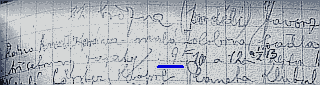
22.3. Ráno hned padla Malá Zolobona a tři setniny (9,10 a 12) zajaty. Úplně překvapeni o ½ 6 ráno. Poručík 9. setniny a všech 20 mužů usnulo na stráži.
Quote(s) from the novel
[II.5] A všechny marškumpačky byla jedna jako druhá, žádná nebyla o chlup lepší než vaše, pane obrlajtnant. Nejhorší byla devátá. Ta s sebou odtáhla do zajetí všechny šarže i s kompaniekomandantem.
[II.5] "Není žádný spěch, pane obrlajtnant. Když jsme měli ject s devátou marškumpanií, tak nás tahali celé čtyry dny za nos. S osmou jakbysmet. Jen s desátou to bylo lepší."
Drogerie Kokoška
is mentioned during the first conversation between Švejk and Rechnungsfeldwebel Vaněk. The former tells an anecdote about his time as a chemist's apprentice with Mr. Kokoška in Na Perštýně.
Background
Drogerie KokoškaPharmacy Kokoška
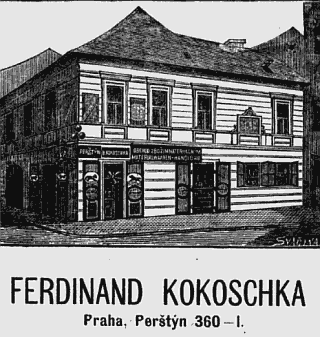
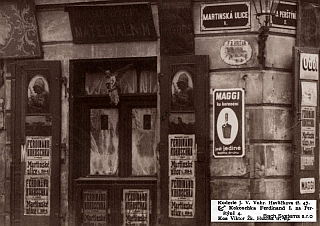
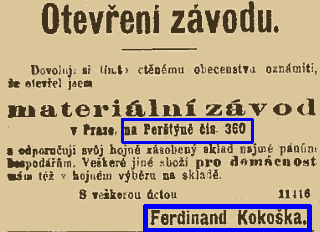
was a chemist's shop where Jaroslav Hašek worked as an apprentice in 1898 after prematurely ending his studies at the gymnasium. The shop was located at the corner of Na Perštýně and Martinská streets, in the house U třech zlatých koulí. The information is confirmed by newspaper adverts, address books and a photo from 1905. The owner Mr. Kokoška opened the shop/workshop in the summer of 1890. It was operating until 1906 when the proprietor died.
From the old pharmacy
The author's time at the chemist's inspired a series of eight stories that were published in Veselá Praha in 1909 and 1910. Here Kokoška, Tauchen and Ferdinand all appear, but the former two with their names slightly twisted but easily recognisable (Kološka and Tauben). The stories were translated into English by Cecil Parrott and were included in the book The Red Commissar.
The stories, written in the first person, describe the pharmacy, the people who worked there, and also customers and neighbours. Pivotal to the story is Mr. Kološka, who is an elderly man with a kind heart. His assistant is the lazy Mr. Tauben, who does not take his duties too seriously and also encourages the young apprentice Hašek not to run his shoes off for the boss. Another employee is Ferdinand, who is known for his colourful and immaculately kept cart, into which he puts all his diligence and pride. Mrs. Kološka is described in extremely unflattering terms and is also given the nickname "acid". She torments her husband and the staff at the pharmacy. Her name is Marie (born Vanouš), she is a tall and corpulent lady but with quite attractive features. She and her father continuously remind Kološka that the business would have gone under by now if it had not been for their help. It is also revealed that Kološka and his wife live together with the unpleasant father-in-law and that the marriage came about for financial reasons. They lived somewhere else, not in the pharmacy building, and appeared to be quite well off.
Fiction and facts
Throughout Hašek's writing one will find a mix of facts, half-facts and invention, and so it is here. Starting with the facts: that the author was an apprentice at the pharmacy is beyond dispute, the owner was indeed Mr. Kokoška and the location of the business is precisely where Švejk puts it. Václav Menger also confirms that a Tauben worked there, likewise a Ferdinand Vavra, who probably is the model for Ferdinand with the colourful cart. On the other hand, the apprentice seems to have had a much more strained relationship with Tauben than what is apparent from the stories. The young Hašek was subjected to some envy from other staff members because he was capable and thus became a favourite of the boss. Further, Menger mentions Mrs. Kokošková and that she came from a wealthy background. This appears to be true, but otherwise her biographical details differ from those of her literary counterpart. From population registers we know that Mrs Kokošková was born Anna Milnerová in 1857 and not Marie Vanouš as in the stories.
As Hašek stated, the family did not live on the premises of the pharmacy. Their address was Prague II, Pštrossová ul. 221/25. Here they are registered from 1880 and the next year their daughter Anna was born, so moving there was clearly a result of the marriage. Hašek may also have been touching real life when describing the obnoxious behaviour of Mrs. Kološková: Anna Kokošková eventually died in a lunatic asylum in Prague. On the other hand, Tauben (or Tauchen) is a mystery. Despite Václav Menger's claim that he existed, there is not a single Tauben to find in population records or police registers, and the few Tauchen who are listed have no obvious link to Kokoška or any pharmacy.
Aftermath
After the death of Mr. Kokoška in 1906, the shop and the workshop were taken over by Václav Rubeš. In the meantime, it had also moved from No. 360 to the next-door No. 359 with address Martinská ulice. Anna Kokošková died as late as 1916, aged 59. It is not known what happened to the daughter Anna, who was 26 when her father died.
Quote(s) from the novel
[II.5] „Já jsem se taky učil materialistou,“ řekl Švejk, „u nějakýho pana Kokošky na Perštýně v Praze. To byl náramnej podivín, a když jsem mu jednou vomylem ve sklepě zapálil sud benzinu a von vyhořel, tak mne vyhnal a gremium mne už nikde nepřijalo, takže jsem se kvůli pitomýmu sudu benzinu nemoh doučit. Vyrábíte také koření pro krávy?“
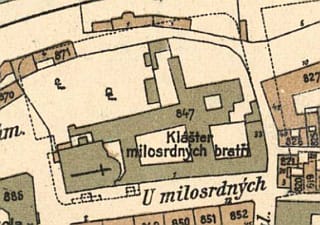
1915 • Celkový pohled na klášter Milosrdných bratří (dům čp. 847) na Starém Městě.
Orientační plán král. hl. města Prahy a obcí sousedních,1909-1914
U milosrdných
is mentioned by Švejk in his story from when he was a chemist's apprentice at drogerie Kokoška.
Background
U milosrdnýchAt the Mercifuls
refers to the hospital Nemocnice na Františku associated with the monastery complex klášter milosrdných bratří s kostelem sv. Šimona a JudyBrothers of Mercy Monastery with the Church of St. Simon and Juda in Staré město.
The hospital has a history that goes back almost 700 years and is functioning to this very day (2024). It was the first in Europe to carry out an amputation of limbs under full anaesthesia (1847). In 1997, a major reconstruction started but was complicated by the disastrous floods of 2002[a].
Quote(s) from the novel
[II.5] Chytal holuby na půdě, uměl votvírat pult s penězma a ještě nás učil jinejm melouchům se zbožím. Já jako kluk jsem měl doma takovou lékárnu, kterou jsem si přines z krámu domů, že ji neměli ani ,U milosrdnejch’. A ten pomoh panu Tauchenovi; jen řek: ,Tak to sem dají, pane Tauchen, ať se na to kouknu,’ hned mu poslal pan Tauchen pro pivo.
Das Infanterieregiment Nr. 91 am Vormarsch in Galizien.VHA,1927
12. Marschkompanie
is mentioned when Švejk, as the newly appointed messenger of 11. Marschkompanie, is in a phone conversation with his colleague Braun from the 12th March Company.
The unit has already been mentioned in the previous chapter, using the more ambiguous wording 12. Kompanie. Hašek freely mixed the terms company and march company, but from the context of The Good Soldier Švejk it is clear that he always had the 12th March Company in mind.
Background
12. Marschkompanie
never existed as a unit in Infanterieregiment Nr. 91 in 1915. The number twelve is no doubt borrowed from 12. Feldkompanie, a pattern that repeats itself with all the march companies from IR. 91 that are mentioned in The Good Soldier Švejk. See also 12. Kompanie.
Quote(s) from the novel
[II.5] „Vaněk? Ten šel do regimentskanceláře. Kdo je u telefonu? Ordonanc od 11. marškumpanie. Kdo je tam? Ordonanc od 12. maršky? Servus, kolego. Jak se jmenuji? Švejk. A ty? Braun.
[II.5] Až budeš tedy něco vědět, tak nám to k 12. marškumpačce zatelefonuj, ty zlatej synáčku blbej. Vodkuď jseš?
[II.5] Nyní následovaly za sebou nějaké věty v podivném chaosu, poněvadž do toho mluvila 12. i 13. marškumpanie současně, a telefonogram úplně se ztratil v té panice zvuků. Švejk nerozuměl ani slova.
[II.5]12. marškumpanie telefonovala, že prý někdo z kanceláře slyšel, že se bude čekat až na cvičení ve střelbě s pohyblivými figurami a že se pojede až po feldmäßigschießübungách.
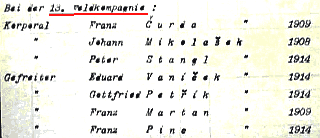
Some of the soldiers in the 13th field company of IR. 91, July 1915.
Das Infanterieregiment Nr. 91 am Vormarsch in Galizien.VHA,1927
13. Marschkompanie
is mentioned when Švejk, the newly appointed messenger of 11. Marschkompanie, is in a telephone conversation with his colleague Braun from 12. Marschkompanie.
Background
13. Marschkompanie
never existed as a unit in Infanterieregiment Nr. 91 in 1915. The number thirteen is no doubt borrowed from 13. Feldkompanie, a pattern that repeats itself with all the march companies from IR. 91 that are mentioned in The Good Soldier Švejk.
13. Feldkompanie
Throughout the novel, Hašek consistently uses the numbering of field companies when he refers to "march companies" or simply "companies". This connection is particularly evident with the fictional 11. Marschkompanie, where not only the number is borrowed from the corresponding field company but also officers in the command hierarchy (Rudolf Lukas, Čeněk Sagner). Thus, there is every reason to assume that the same applies to the 13th Field Company. This company was one of four in IV. Feldbataillon and the commander was OberleutnantEgon Flatz.
Quote(s) from the novel
[II.5] „Tak vidíš, náš tam šel taky a vod 13. maršky taky; právě jsem mluvil s ordonancem vod ní po telefonu. Mně se ten kvalt nelíbí. A nevíš nic, jestli se pakuje u muziky?“
[II.5] Nyní následovaly za sebou nějaké věty v podivném chaosu, poněvadž do toho mluvila 12. i 13. marškumpanie současně, a telefonogram úplně se ztratil v té panice zvuků. Švejk nerozuměl ani slova.
[II.5] "13. marška. Haló. Kolik máš hodin? Já se nemůžu dovolat centrály. Mě nejdou nějak dlouho ablézovat."
[II.5] Tento optimistický názor nesdílela 13. marškumpačka, která telefonovala, že právě se vrátil kaprál Havlík z města a slyšel od jednoho železničního zřízence, že už vozy jsou na stanici.
Das Milchmariandl war die bekannteste Kantine im Brucker Lager.
150 Jahre Brucker Lager/TÜPl Bruckneudorf - I.Petra Weiß,9.12.2017
Kantine is mentioned 6 times in The Good Soldier Švejk.
Kantine
is, for a brief moment, the scene of the plot when Švejk goes there to fetch Rechnungsfeldwebel Vaněk, who in the afternoon in town had been treated by a landowner from Pardubice whose son served in Brucker Lager. Now Vaněk was telling a friend how much money could be made on enamel paints and cement dyes.
Background
Kantine
probably refers to a canteen for the rank and file that, according to the description in The Good Soldier Švejk, was located by Lagerallee. In the old camp there were three Lagerkantinen and also one in the new camp[a]. This short sequence of the plot no doubt took place in one of the three canteens in the old lager. One would guess that Milchmariandl/Milchhalle was the scene, as it was the best known of the canteens and seemingly located by the alley.
Quote(s) from the novel
[II.5] "Nevím, pane obrlajtnant, kde by moh bejt ten zatracenej Vaněk.""V kanceláři u regimentu byl a někam odešel. Myslím, že bude asi v kantýně.
[II.5] Švejk šel se podívat na odvázání a doprovázel Balouna pocestě, poněvadž se šlo tím směrem současně ke kantýně, kde měl najít účetního šikovatele Vaňka.
[II.5] Vousatý Baloun těžce vzdychl a odcházel k plukovní kanceláři, zatímco Švejk zamířil do kantýny starou alejí vysokých lip. Účetní šikovatel Vaněk seděl mezitím spokojeně v kantýně a vyprávěl nějakému známému štábnímu šikovateli, kolik se mohlo vydělat před válkou na emailových barvách a cementových nátěrech.
[II.5] Že jsem byl v kantině? Kdože to povídal? Ten okultista kuchař z oficírmináže? Dovolil jsem si tam zajít. Víte, pane obrlajtnant, jak nazýval ten okultista tu paniku s těmi konservami?
[II.5] Přijdu podepsat po mináži. Nikoho nepouštějte do města. Do kantiny v lágru? Po mináži na hodinu... Zavolejte sem Švejka!...
[II.5] Já vám chtěl telefonovat. - Že jsem byl v kantýně? Kdože to povídal? Ten okultista kuchař z oficírmináže?
[II.5] Vorbereitung zum Abmarsch. Účty? Přijdu podepsat po mináži. Nikoho nepouštějte do města. Do kantýny v lágru? Po mináži na hodinu...Zavolejte sem Švejka!...Švejku, vy zůstanete zatím u telefonu.
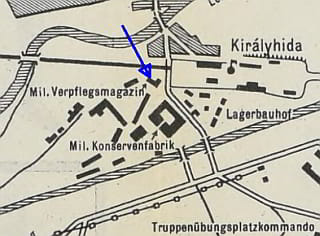
Militär-Adressbuch für Wien und Umgebung.K.u.k. Platzkommando Wien,1913
Magazin is mentioned 13 times in The Good Soldier Švejk.
Magazin
is repeatedly mentioned by Rechnungsfeldwebel Vaněk during preparations for departure to the front. Allegedly, tinned food is stored here, but these tins are, according to Vaněk, fictitious.
Background
MagazinStores
evidently refers to some food supply stores in Brucker Lager. There were several of these[a], so which the author had in mind is not obvious. Near the entrance to the camp, next to the Konservenfabrik, was an Militärisches Verpflegsmagazin (military supply store)[b], and this is the obvious candidate.
Quote(s) from the novel
[II.5] „Já jsem za hodinu doma, Švejku, a pak se těšte... Vy tedy hned se seberte, jděte do baráku a najděte nějakého cuksfíru, třebas Fuchse, a řekněte mu, že má ihned vzít deset mužů a jít s nimi do magacínu fasovat konservy. Opakujte to, co má jít dělat?“
„Jít s deseti muži do magacínu fasovat konservy pro kumpanii.“
„Konečně jednou neblbnete. Já zatím budu telefonovat Vaňkovi do regimentskanzleie, aby šel také do magacínu a převzal je. Jestli přijde zatím do baráku, ať nechá všeho a běží laufšrit do magacínu. A teď zavěste sluchátko.“
[II.5] "Pane rechnungsfeldvébl," hlásil mu Švejk, "mají hned jít k magacínu, tam už čeká cuksfíra Fuchs s 10 maníky, budou se fasovat konzervy. Mají běžet laufšrit. Pan obrlajtnant dvakrát už telefonoval."
[II.5] "Pomalu," řekl rozvážně Švejk, "hned se seberou, jdou do baráku, vezmou tam deset mužů a laufšrit s nimi k magacínu, budete fasovat konzervy."
[II.5] Účetní šikovatel Vaněk bubnoval zas dál na stůl, pil a občas vzpomněl, že na něho čeká deset mužů s četařem u skladiště.
[II.5] Potom s ním mluvil po telefonu četař Fuchs, který po celou tu dobu čekal nejen s deseti muži nejen marně na účetního šikovatele, ale dokonce shledal, že je skladiště zavřeno.
[II.5] "Nebuďte sprostá, slečno. Už jste fasovali konzervy? Vod nás tam šli a nepřinesli nic. Magacín byl zavřenej."
Infanterieregiment Nr. 102
was one of 102 Austro-Hungarian infantry regiments. It was established in 1883 when the number of infantry regiments in k.u.k. Heer was expanded from 80 to 102. The Ergänzungsbezirk was Benešov.
Recruitment and garrison
Heeresergänzungsbezirk Nr. 102 encompassed four hejtmanství: Benešov, Příbram, Sedlčany and Milevsko. Ninety percent of the men were of Czech nationality.
It was customary in Austria-Hungary to move regiments around in various parts of the empire and it rarely occurred that an entire regiment served in the same location. The four (sometimes three) battalions of an infantry regiment were usually located in 2-3 places, and this was also the case with Infanterieregiment Nr. 102. In 1914, staff and 3rd and 4th battalion were garrisoned in Prague (Aujezdkaserne), the 1st battalion in Mostar in Bosnia and the 2nd battalion in Benešov[a].
During the war
The regiment was mobilised at the outbreak of war and, as part of Prague's 9. Infanteriedivision, sent to the Drina, a unit that belonged to the 5. Armee and 8. Armeekorps[c]. Together with Infanterieregiment Nr. 91, they formed 17. Infanteriebrigade. They took part in the three failed invasions of Serbia in the autumn of 1914. Forced into a calamitous withdrawal onto Hungarian soil around 15 December, they were in early February 1915 transferred to the Carpathians. From early May they took part in the Central Powers offensives in Galicia and Volhynia.
In November 1915, they were transferred to the Isonzo-front east of Monfalcone, on the so-called Karst-plateau in present-day Slovenia. Here they remained until October 1917 (apart from a short interlude south of Trento in early summer 1916). In September 1916, they were placed under the command of 28. Infanteriedivision. The regiment took part in the advance into Italy after the October 1917 breakthrough at Caporetto and in November they reached Piave. Here they remained until September 1918, when the division was sent to Serbia in a futile attempt to consolidate the collapsing Macedonian front[b].
Until September 1916, their battlegrounds were roughly the same as those of their sister regiments in 9. Infanteriedivision. Jaroslav Hašek would have been in touch with Infanterieregiment Nr. 102 during the period from 11 July 1915 until he was captured on 24 September. Like Infanterieregiment Nr. 91 and the rest of the division, the regiment took part in the bloody battles by Sokal and Khorupan that year.
The detached 1st battalion never fought together with the rest of the regiment and was, at the end of 1917, incorporated into the newly formed Infanterieregiment Nr. 136.
Regimental commander at the outbreak of war was OberstHugo Kornberger[a].
Judicial murder
In [II.3], a soldier from the regiment is mentioned directly. reservist Kudrna was, in 1915, accused of mutiny, sentenced to death, and executed at Motol.
Ersatzbataillon
The replacement battalion was, around 20 May 1915, relocated to Békéscsaba, where they remained until the end of the war.
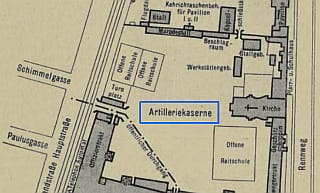
Artillery barracks in Vienna, III. Bezirk, Rennweg.
Militär-Adressbuch für Wien und Umgebung,1913
Artilleriekaserne
is mentioned when the narrator describes a new telephone system where everyone can listen in on anyone else. One could, for instance, listen to the train (supply troops) and the artillery barracks swearing at each other.
Background
Artilleriekaserne
appears to refer to some artillery barracks in Bruck or Királyhida, but one can easily establish that in 1913, no such barracks existed in either of the twin towns on the Leitha[a]. On the other hand, it is known that the artillery exercised in Királyhida, and by 1915, they may have been assigned a permanent home.
The two nearest artillery barracks were located in Vienna, and it is possible that they were connected to the telephone system that served Brucker Lager.
Quote(s) from the novel
[II.5] Trén si nadával s dělostřeleckými kasárnami, saperáci vyhrožovali vojenské poště, vojenská střelnice vrčela na odděleni strojních pušek.
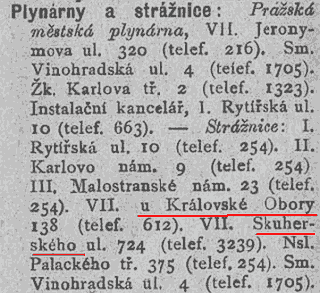
Adresář královského hlavního města Prahy a obcí sousedních,1910
Plynární stanice Letná is mentioned 3 times in The Good Soldier Švejk.
Plynární stanice Letná
is mentioned in Švejk's anecdote about gas worker Zátka.
Background
Plynární stanice LetnáLetná Gas Station
refers to a coal gas station at Letná, of which there were two in 1910. Both were guard-houses (strážnice) whose main duty was street lighting.
The most obvious candidate is situated on the Letná plain, in U Královské Obory 138[a] (now Nad Královskou oborou 138/37), but the station in Skuherského 724/32 (now Pplk. Sochora 724/30) in Holešovice cannot be ruled out entirely.
Quote(s) from the novel
[II.5] Co se mý osoby týká, pane rechnungsfeldvébl, když jsem to slyšel, co vy jste vo těch outvarech povídal, tak jsem si vzpomněl na nějakýho Zátku, plynárníka; von byl na plynární stanici na Letný a rozsvěcoval a zas zhasínal lampy. Byl to osvětovej muž a chodíval po všech možnejch putykách na Letný, poněvadž mezi rozsvěcováním a zhasínáním lamp je dlouhá chvíle, a potom k ránu na plynárenské stanici vedl zrovna takový hovory jako vy, jenže ten zas říkal: "Kostka je hrana, proto je kostka hranatá." Já to slyšel na vlastní voči, když mě jeden vožralej policajt předved pro znečištění ulice vomylem místo na policejní strážnici na plynárenskou strážnici.
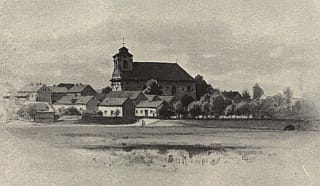
Chrám svaté Kateřiny
is mentioned in the same story as Rekrut Pech, who was from nearby Dolní Bousov where this church is. According to Pech, the church was from the 14th century and renovated by Count Václav Vratislav Netolický.
Background
Chrám svaté Kateřiny
is the parish church in Dolní Bousov. It was built in 1759 and 1760 in baroque style, apparently on the site of a wooden church that dated back to at least 1352[c].
The text in The Good Soldier Švejk gives the impression that Václav Vratislav Netolický renovated the existing church. As explained below, Hašek quoted Ottův slovník naučný almost verbatim, but he left out one significant word. The encyclopedia states that the church was originally from the 14th century, suggesting that the church was rebuilt rather than renovated.
Pech and Otto's encyclopaedia
Recruit Pech's monologue about Dolní Bousov closely resembles this entry in Otto's Encyclopaedia.
Ottův slovník naučný,1891
Rekrut Pech's monologue about his origins is almost a verbatim quotation from Ottův slovník naučný, as literary scholar Antonín Měšťan demonstrated in 1983[a].
Apart from a few minor discrepancies, The Good Soldier Švejk spells out the encyclopaedia's abbreviations while retaining its factual details[b].
Diese Information, für die der Offizier dem Rekruten Pech sechs Ohrfeigen verabreichte - eine für jeden Jahrmarkt - ist ein nur unwesentlich geändertes Zitat aus dem 4. Band des Ottův slovník naučný. Antonín Měšťan, 1983, Realien und Pseudorealien in Hašek's "Švejk"
Quote(s) from the novel
[II.5] Dolní Bousov, Unter Bautzen, 267 domů, 1936 obyvatelů českých, hejtmanství Jičín, okres Sobotka, bývalé panství Kosť, farní chrám svaté Kateřiny ze 14. století, obnovený hrabětem Václavem Vratislavem Netolickým, škola, pošta, telegraf, stanice české obchodní dráhy, cukrovar, mlýn s pilou, samota Valcha, šest výročních trhů.’
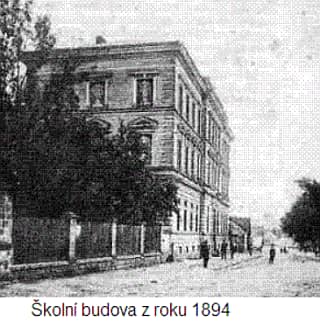
Dolní Bousov škola
is mentioned in the story Švejk tells about Rekrut Pech, who came from Dolní Bousov. The school is one of the details he includes.
Background
Dolní Bousov školaDolní Bousov School
refers to the primary school in the town. A school already existed in the 1600s, but after a fire in 1861, teaching was moved to various buildings around the town square. The number of students had reached 402 by 1880, but it was not until 1893 that it was decided to build a new school, which started operating the following year[c].
However, the school mentioned by Rekrut Pech cannot be the new building, as the quote in The Good Soldier Švejk is taken from Ottův slovník naučný, volume 4. This was published in 1891, so the term "school" here simply means that there was a school in Dolní Bousov.
Pech and Otto's encyclopaedia
Recruit Pech's monologue about Dolní Bousov closely resembles this entry in Otto's Encyclopaedia.
Ottův slovník naučný,1891
Rekrut Pech's monologue about his origins is almost a verbatim quotation from Ottův slovník naučný, as literary scholar Antonín Měšťan demonstrated in 1983[a].
Apart from a few minor discrepancies, The Good Soldier Švejk spells out the encyclopaedia's abbreviations while retaining its factual details[b].
Diese Information, für die der Offizier dem Rekruten Pech sechs Ohrfeigen verabreichte - eine für jeden Jahrmarkt - ist ein nur unwesentlich geändertes Zitat aus dem 4. Band des Ottův slovník naučný. Antonín Měšťan, 1983, Realien und Pseudorealien in Hašek's "Švejk"
Quote(s) from the novel
[II.5] Odkud jste, Pechu?’ Pech byl inteligentní člověk a vodpověděl: Dolní Bousov, Unter Bautzen, 267 domů, 1936 obyvatelů českých, hejtmanství Jičín, okres Sobotka, bývalé panství Kosť, farní chrám svaté Kateřiny ze 14. století, obnovený hrabětem Václavem Vratislavem Netolickým, škola, pošta, telegraf, stanice české obchodní dráhy, cukrovar, mlýn s pilou, samota Valcha, šest výročních trhů.’
Dolní Bousov pošta
is mentioned in the story Švejk tells about Rekrut Pech, who came from Dolní Bousov. The post office is one of the details he includes.
Background
Dolní Bousov poštaDolní Bousov Post Office
refers to the local post office. The owner was k.k. Post- und Telegraphenverwaltung, an institution that existed from 1866, with telegram services operating from 1847. When the various communication services became available in Dolní Bousov is not known. The current post office is located on the main square, and one would assume that it has always been there.
Pech and Otto's encyclopaedia
Recruit Pech's monologue about Dolní Bousov closely resembles this entry in Otto's Encyclopaedia.
Ottův slovník naučný,1891
Rekrut Pech's monologue about his origins is almost a verbatim quotation from Ottův slovník naučný, as literary scholar Antonín Měšťan demonstrated in 1983[a].
Apart from a few minor discrepancies, The Good Soldier Švejk spells out the encyclopaedia's abbreviations while retaining its factual details[b].
Diese Information, für die der Offizier dem Rekruten Pech sechs Ohrfeigen verabreichte - eine für jeden Jahrmarkt - ist ein nur unwesentlich geändertes Zitat aus dem 4. Band des Ottův slovník naučný. Antonín Měšťan, 1983, Realien und Pseudorealien in Hašek's "Švejk"
Quote(s) from the novel
[II.5] Odkud jste, Pechu?’ Pech byl inteligentní člověk a vodpověděl: Dolní Bousov, Unter Bautzen, 267 domů, 1936 obyvatelů českých, hejtmanství Jičín, okres Sobotka, bývalé panství Kosť, farní chrám svaté Kateřiny ze 14. století, obnovený hrabětem Václavem Vratislavem Netolickým, škola, pošta, telegraf, stanice české obchodní dráhy, cukrovar, mlýn s pilou, samota Valcha, šest výročních trhů.’
Dolní Bousov telegraf
is mentioned in the story Švejk tells about Rekrut Pech, who came from Dolní Bousov. The telegraph office is one of the local institutions that he mentions.
Background
Dolní Bousov telegrafDolní Bousov Telegraph
refers to the local telegraph station that surely shared the building with the post office, an arrangement that was common at the time because the post and telegraph services belonged to the same public administration. The owner was k.k. Post- und Telegraphenverwaltung, an institution that existed from 1866. The post services existed from 1722, with telegram services introduced in 1847. When the various communication services became available in Dolní Bousov is not known. The current post office is located on the main square, and one would assume that it has always been there.
Pech and Otto's encyclopaedia
Recruit Pech's monologue about Dolní Bousov closely resembles this entry in Otto's Encyclopaedia.
Ottův slovník naučný,1891
Rekrut Pech's monologue about his origins is almost a verbatim quotation from Ottův slovník naučný, as literary scholar Antonín Měšťan demonstrated in 1983[a].
Apart from a few minor discrepancies, The Good Soldier Švejk spells out the encyclopaedia's abbreviations while retaining its factual details[b].
Diese Information, für die der Offizier dem Rekruten Pech sechs Ohrfeigen verabreichte - eine für jeden Jahrmarkt - ist ein nur unwesentlich geändertes Zitat aus dem 4. Band des Ottův slovník naučný. Antonín Měšťan, 1983, Realien und Pseudorealien in Hašek's "Švejk"
Quote(s) from the novel
[II.5] Odkud jste, Pechu?’ Pech byl inteligentní člověk a vodpověděl: Dolní Bousov, Unter Bautzen, 267 domů, 1936 obyvatelů českých, hejtmanství Jičín, okres Sobotka, bývalé panství Kosť, farní chrám svaté Kateřiny ze 14. století, obnovený hrabětem Václavem Vratislavem Netolickým, škola, pošta, telegraf, stanice české obchodní dráhy, cukrovar, mlýn s pilou, samota Valcha, šest výročních trhů.’
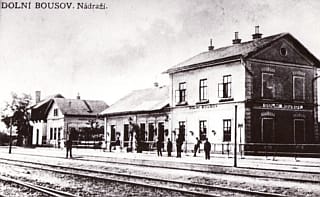
Dolní Bousov stanice
is mentioned in the story Švejk tells about Rekrut Pech, who came from Dolní Bousov. The railway station is one of the details he includes.
Background
Dolní Bousov staniceDolní Bousov Station
refers to the railway station in the town, built in 1882 in connection with the opening of České obchodní dráhy. The station is still (2025) serving passenger trains on the lines Bakov nad Jizerou - Kopidlno and Mladá Boleslav - Lomnice nad Popelkou.
Pech and Otto's encyclopaedia
Recruit Pech's monologue about Dolní Bousov closely resembles this entry in Otto's Encyclopaedia.
Ottův slovník naučný,1891
Rekrut Pech's monologue about his origins is almost a verbatim quotation from Ottův slovník naučný, as literary scholar Antonín Měšťan demonstrated in 1983[a].
Apart from a few minor discrepancies, The Good Soldier Švejk spells out the encyclopaedia's abbreviations while retaining its factual details[b].
Diese Information, für die der Offizier dem Rekruten Pech sechs Ohrfeigen verabreichte - eine für jeden Jahrmarkt - ist ein nur unwesentlich geändertes Zitat aus dem 4. Band des Ottův slovník naučný. Antonín Měšťan, 1983, Realien und Pseudorealien in Hašek's "Švejk"
Quote(s) from the novel
[II.5] Odkud jste, Pechu?’ Pech byl inteligentní člověk a vodpověděl: Dolní Bousov, Unter Bautzen, 267 domů, 1936 obyvatelů českých, hejtmanství Jičín, okres Sobotka, bývalé panství Kosť, farní chrám svaté Kateřiny ze 14. století, obnovený hrabětem Václavem Vratislavem Netolickým, škola, pošta, telegraf, stanicečeské obchodní dráhy, cukrovar, mlýn s pilou, samota Valcha, šest výročních trhů.’
České obchodní dráhy
is mentioned in the story Švejk tells about Rekrut Pech, who came from Dolní Bousov. This railway company is one of the details he includes.
Background
České obchodní dráhyThe Czech Commercial Railway
was a private railway company founded in 1881 by the building contractors Jan Muzika (1832-1882) and Karl Schnabel. However, after the first died in 1882, it gradually came under the control of the state railway company Rakouská společnost státní dráhyÖsterreichische Staatseisenbahn-Gesellschaft. As a legal entity, České obchodní dráhy existed until 1909, which explains why they were listed in Ottův slovník náučný in 1891. The company headquarters was located in Vienna. In 1923, the lines were taken over by the Czechoslovak state.
The network was spread out with lines near Plzeň, Prague and eastern Bohemia. Larger stations were Nymburk, Jičín and Hradec Králové. Dolní Bousov was (and is) on the line Kopidlno - Bakov nad Jizerou.
Pech and Otto's encyclopaedia
Recruit Pech's monologue about Dolní Bousov closely resembles this entry in Otto's Encyclopaedia.
Ottův slovník naučný,1891
Rekrut Pech's monologue about his origins is almost a verbatim quotation from Ottův slovník naučný, as literary scholar Antonín Měšťan demonstrated in 1983[a].
Apart from a few minor discrepancies, The Good Soldier Švejk spells out the encyclopaedia's abbreviations while retaining its factual details[b].
Diese Information, für die der Offizier dem Rekruten Pech sechs Ohrfeigen verabreichte - eine für jeden Jahrmarkt - ist ein nur unwesentlich geändertes Zitat aus dem 4. Band des Ottův slovník naučný. Antonín Měšťan, 1983, Realien und Pseudorealien in Hašek's "Švejk"
Quote(s) from the novel
[II.5] Odkud jste, Pechu?’ Pech byl inteligentní člověk a vodpověděl: Dolní Bousov, Unter Bautzen, 267 domů, 1936 obyvatelů českých, hejtmanství Jičín, okres Sobotka, bývalé panství Kosť, farní chrám svaté Kateřiny ze 14. století, obnovený hrabětem Václavem Vratislavem Netolickým, škola, pošta, telegraf, stanice české obchodní dráhy, cukrovar, mlýn s pilou, samota Valcha, šest výročních trhů.’
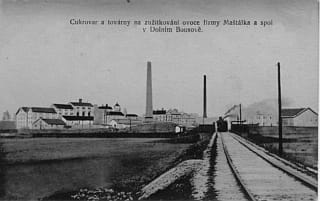
Dolní Bousov cukrovar
is mentioned in the story Švejk tells about Rekrut Pech, who came from Dolní Bousov. The sugar factory is one of the details he includes.
Background
Dolní Bousov cukrovarDolní Bousov Sugar Factory
was a sugar factory in Dolní Bousov that was built in 1870 and ceased production in 1932[c]. Today (2025), the site of the former sugar factory hosts several businesses.
Pech and Otto's encyclopaedia
Recruit Pech's monologue about Dolní Bousov closely resembles this entry in Otto's Encyclopaedia.
Ottův slovník naučný,1891
Rekrut Pech's monologue about his origins is almost a verbatim quotation from Ottův slovník naučný, as literary scholar Antonín Měšťan demonstrated in 1983[a].
Apart from a few minor discrepancies, The Good Soldier Švejk spells out the encyclopaedia's abbreviations while retaining its factual details[b].
Diese Information, für die der Offizier dem Rekruten Pech sechs Ohrfeigen verabreichte - eine für jeden Jahrmarkt - ist ein nur unwesentlich geändertes Zitat aus dem 4. Band des Ottův slovník naučný. Antonín Měšťan, 1983, Realien und Pseudorealien in Hašek's "Švejk"
Quote(s) from the novel
[II.5] Odkud jste, Pechu?’ Pech byl inteligentní člověk a vodpověděl: Dolní Bousov, Unter Bautzen, 267 domů, 1936 obyvatelů českých, hejtmanství Jičín, okres Sobotka, bývalé panství Kosť, farní chrám svaté Kateřiny ze 14. století, obnovený hrabětem Václavem Vratislavem Netolickým, škola, pošta, telegraf, stanice české obchodní dráhy, cukrovar, mlýn s pilou, samota Valcha, šest výročních trhů.’
Dolní Bousov mlýn
is mentioned in the story Švejk tells about Rekrut Pech, who came from Dolní Bousov. The sawmill is one of the details he includes.
Background
Dolní Bousov mlýnDolní Bousov sawmill
was a sawmill in Dolní Bousov, also called Červený mlýn (The Black Mill)[b]. Its history goes back to at least 1618 and it continued to operate until around 1970 (that year the equipment was dismantled)[c].
Pech and Otto's encyclopaedia
Recruit Pech's monologue about Dolní Bousov closely resembles this entry in Otto's Encyclopaedia.
Ottův slovník naučný,1891
Rekrut Pech's monologue about his origins is almost a verbatim quotation from Ottův slovník naučný, as literary scholar Antonín Měšťan demonstrated in 1983[a].
Apart from a few minor discrepancies, The Good Soldier Švejk spells out the encyclopaedia's abbreviations while retaining its factual details[b].
Diese Information, für die der Offizier dem Rekruten Pech sechs Ohrfeigen verabreichte - eine für jeden Jahrmarkt - ist ein nur unwesentlich geändertes Zitat aus dem 4. Band des Ottův slovník naučný. Antonín Měšťan, 1983, Realien und Pseudorealien in Hašek's "Švejk"
Quote(s) from the novel
[II.5] Odkud jste, Pechu?’ Pech byl inteligentní člověk a vodpověděl: Dolní Bousov, Unter Bautzen, 267 domů, 1936 obyvatelů českých, hejtmanství Jičín, okres Sobotka, bývalé panství Kosť, farní chrám svaté Kateřiny ze 14. století, obnovený hrabětem Václavem Vratislavem Netolickým, škola, pošta, telegraf, stanice české obchodní dráhy, cukrovar, mlýn s pilou, samota Valcha, šest výročních trhů.’
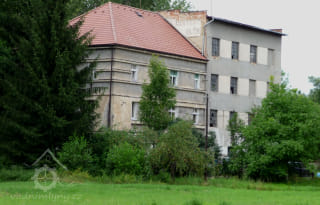
Valcha
is mentioned in the same story as Rekrut Pech, the intelligent soldier from Dolní Bousov.
Background
Valcha
was a remote dwelling and water mill on the northern outskirts of Dolní Bousov. The mill was built in the 17th century and was in operation until 1954. The building is still there (2014) but is now derelict[c].
Pech and Otto's encyclopaedia
Recruit Pech's monologue about Dolní Bousov closely resembles this entry in Otto's Encyclopaedia.
Ottův slovník naučný,1891
Rekrut Pech's monologue about his origins is almost a verbatim quotation from Ottův slovník naučný, as literary scholar Antonín Měšťan demonstrated in 1983[a].
Apart from a few minor discrepancies, The Good Soldier Švejk spells out the encyclopaedia's abbreviations while retaining its factual details[b].
Diese Information, für die der Offizier dem Rekruten Pech sechs Ohrfeigen verabreichte - eine für jeden Jahrmarkt - ist ein nur unwesentlich geändertes Zitat aus dem 4. Band des Ottův slovník naučný. Antonín Měšťan, 1983, Realien und Pseudorealien in Hašek's "Švejk"
Quote(s) from the novel
[II.5] 'Dolní Bousov, Unter Bautzen, 267 domů, 1936 obyvatelů českých, hejtmanství Jičín, okres Sobotka, bývalé panství Kosť, farní chrám svaté Kateřiny ze 14. století, obnovený hrabětem Václavem Vratislavem Netolickým, škola, pošta, telegraf, stanice české obchodní dráhy, cukrovar, mlýn s pilou, samota Valcha, šest výročních trhů.’
8. Marschkompanie
never existed as a unit in Infanterieregiment Nr. 91 in 1915. The number eight is evidently borrowed from the 8th field company, a numerical pattern that recurs with all the companies from IR. 91 that are mentioned in The Good Soldier Švejk. The best example of this literary transformation is clearly Švejk's own 11. Marschkompanie.
The 8th field company, which the author surely had in mind, was part of II. Feldbataillon, a unit that Hašek knew well from his time in Infanterieregiment Nr. 91 in 1915. The company commander when Hašek arrived at the front was OberleutnantPeregrin Baudisch (1883-1964), an officer who distinguished himself during the battle of Sokal. Later, on the Italian Front, he led the so-called Sturmtruppen (assault troops). Baudisch was battalion commander until XII. Marschbataillon arrived at the front on 11 July 1915 and was succeeded in this position by OberstleutnantFranz Wenzel.
Quote(s) from the novel
[II.5] Pamatuji se u osmé maršky na infanteristu Sylvanusa. Ten měl dřív trest za trestem, a jaké tresty. Neostýchal se ukrást kamarádovi poslední krejcar, a když přišel do gefechtu, tak první prostříhal drahthindernissy, zajmul tři chlapy a jednoho hned po cestě odstřelil, že prý mu nedůvěřoval.
[II.5] "Není žádný spěch, pane obrlajtnant. Když jsme měli ject s devátou marškumpanií, tak nás tahali celé čtyry dny za nos. S osmou jakbysmet. Jen s desátou to bylo lepší."
6. Marschkompanie
is mentioned when the narrator refers to Zugsführer Teveles, the bogus squad leader from this company.
Background
6. Marschkompanie
never existed as a unit in Infanterieregiment Nr. 91 in 1915. The number six is evidently borrowed from the 6th field company, a numerical pattern that recurs with all the companies from IR. 91 that are mentioned in The Good Soldier Švejk. The best example of this literary transformation is clearly Švejk's own 11. Marschkompanie.
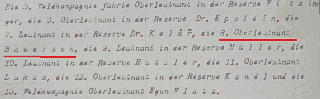
The 6th field company, which the author surely had in mind, was part of II. Feldbataillon, a unit that Hašek knew well from his time in Infanterieregiment Nr. 91 in 1915. The company commander when Hašek arrived at the front was OberleutnantDr. Epstein, a reserve officer.
Quote(s) from the novel
[II.5] Potom byl ještě druhý případ. S jednoročním dobrovolníkem Markem dodán byl současně na hauptvachu od divisijního soudu falešný četař Teveles, který se nedávno objevil u regimentu, kam byl poslán z nemocnice v Záhřebě. Měl velkou stříbrnou medalii, odznaky jednoročního dobrovolníka a tři hvězdičky. Vyprávěl o hrdinských činech 6. maršové roty na Srbsku a že zbyl z ní jen sám. Vyšetřováním bylo zjištěno, že s 6. marškou na začátku války odešel skutečně nějaký Teveles, který však neměl práva jednoročního dobrovolníka. Vyžádána byla zpráva od brigády, ku které byla 6. marška přikomandírovaná, když 2. prosince 1914 se utíkalo z Bělehradu, a zjištěno, že v seznamu navržených nebo vyznamenaných stříbrnými medaliemi není žádný Teveles. Byl-li však pěšák Teveles povýšen v bělehradské válečné kampani za četaře, nedalo se naprosto zjistit, poněvadž celá 6. marškumpanie se ztratila u cerkve sv. Sávy v Bělehradě i se svými důstojníky.
Church of Saint Sava
is mentioned because the entire 6. Marschkompanie was lost here during the withdrawal from Belgrade on 2 December 1914. This is brought up in connection with the trial of Zugsführer Teveles.
Background
Church of Saint Sava
at first glance seems to refer to the largest and most important cathedral in Serbia, the largest cathedral in south-eastern Europe, and also the largest Orthodox cathedral in the world.
This assumption is, however, incorrect, because in 1914 the cathedral was still only being planned. Construction started as late as 1935, but in 1914 there was a small church with the same name on the site, and this is surely the one the author has in mind. Both churches were/are located on the Vračar hill.
The missing march company
The story about the missing 6. Marschkompanie may be based on real events, although this company never existed (each march battalion consisted of four companies, numbered I, II, III and IV). The author may, however, have had IR. 91/6th field company or another company of IR. 91 in mind. These fought by Belgrade during the withdrawal from Serbia in the week before 15 December 1914. During this time the regiment lost three entire companies before the remainder withdrew to Hungary across the river Sava. The three missing field companies (5th, 13th and 14th) were, however, captured by Borak south of Belgrade, not in the city itself.
Belgrade 1914
In this narrative, the author mixes up dates and events. K.u.k. Heer withdrew from Belgrade on 14 December 1914 but they had entered the Serbian capital on the 2nd. Otherwise, Infanterieregiment Nr. 91 never operated in the city centre where Church of Saint Sava was located.
Quote(s) from the novel
[II.5] Byl-li však pěšák Teveles povýšen v bělehradské válečné kampani za četaře, nedalo se naprosto zjistit, poněvadž celá 6. marškumpanie se ztratila u cerkve sv. Sávy v Bělehradě i se svými důstojníky.
Two important figures in Švejk's march battalion: commander Ságner and accounting sergeant Vaněk from the 11th company.
České slovo,13.7.1924
XIII. Marschbataillon
refers to the march battalion that Švejk belonged to in Királyhida and later went to the front with. Hauptmann Ságner was the commander, but most important in the context of The Good Soldier Švejk is that Švejk's company, 11. Marschkompanie, belonged to this battalion.
The number of the battalion is only mentioned once, in connection with Kadett Biegler's stay in hospital in Budapest. Otherwise, the battalion is mostly referred to as march battalion and in one case as march battalion N.
Background
XIII. Marschbataillon
(in IR. 91) was a battalion that was trained in Királyhida in July 1915 and sent to the front in early August. They arrived at Żdżary (15 km north of Sokal) on 15 August 1915, where they were merged with the field battalions. The battalion commander was HauptmannOtto Wimmer.
Contrary to what one would expect, Hašek was not part of this battalion, but rather the preceding one, XII. Marschbataillon. This was formed around 1 June 1915 and led by MajorFranz Wenzel (from 1 July Oberstleutnant). They were trained at Brucker Lager until their departure to the front on 30 June. They arrived at the battlefield by the Złota Lipa river (ukr. Золота Липa) on 11 July. Two of the four march companies were reformed into 11. Feldkompanie and 12. Feldkompanie, units that had been wiped out in the fighting in the weeks before. The rest of the march battalion was distributed among the other ten field companies.
It is known that Oberleutnant Lukáš was the commander of 4th march company and under him were Hans Bigler, Jaroslav Hašek, František Strašlipka and Jan Vaněk. One of the other companies was led by reserve lieutenant Paul Kandl (b. 1884 in Prachatice, an economist by profession), who took over 12. Feldkompanie at the front. The names of the other two company commanders are unknown.
March battalions
Units from the IR. 91/XIV. march battalion at Khorupan. They arrived on 18 September 1915.
Jednadevadesátníci, Jan Ciglbauer, 2018
After completing training at the reserve battalion, the soldiers were dispatched to the front in so-called march battalions. These consisted of up to 1,000 men, were denoted by Roman numerals and divided into four march companies[1]. The march battalions were sent to the front roughly once a month. By the end of the war, Ersatzbataillon IR. 91 had trained, prepared and dispatched 44 march battalions. One example is the 40th march battalion that departed on 23 May 1918, where LeutnantHans Bigler commanded one of the squads in the 2nd company. Five of the march battalions were sent to Serbia during the autumn of 1914, and the following nine were dispatched to the eastern front in 1915. The rest were destined for the Italian front after IR. 91 was transferred there in November 1915. At the end of September 1918, the regiment was transferred to Serbia, so the last march battalion may have been sent there.
After the outbreak of war, the number of soldiers in the city increased and lack of accommodation led to many units being lodged in schools and other large buildings. This also applied to march units, and Suché Vrbné (Dirnfellern) is a name that often crops up. This was a village east of the railway station, now part of the city. Records exist that the 7th and 11th march battalions were garrisoned there, and probably many of the others too. At the garrison in Budějovice, a total of 11 march battalions from IR. 91 were trained and equipped.
Numbering of march companies. Kadettaspirant Bigler in June 1915. His superior was Oberleutnant Lukas.
The march battalion was typically formed a month before planned departure, and it was as part of this unit that the soldiers completed their training. The XII. Marschbataillon of Infanterieregiment Nr. 91 was, for example, formed on 1 June 1915 and departed for the front on 30 June. They were transported by train to a so-called Etappenstation (staging station) behind the lines, and then continued on foot. The mentioned 12th march battalion spent five days on the train to Sambor and then marched for nearly a week before they reached their destination. On arrival, the newcomers were distributed across the existing field battalions, and if possible, entire units were replaced. IR. 91 at times lost entire field companies, and these were then replaced one-to-one by a march company. It also happened that march battalions were engaged in fighting before they joined the main part of the regiment.
Quote(s) from the novel
[II.5] „A víte, pane obrlajtnant,“ řekl, důvěrně mrkaje, „že se má stát pan hejtman Ságner batalionskomandantem našeho maršbatalionu? Napřed, jak říkal štábsfeldvébl Hegner, se myslelo, že vy budete, poněvadž jste nejstarší důstojník u nás, batalionskomandantem, a potom prý přišlo od divise na brigádu, že je jmenován pan hejtman Ságner.“
[III.1] "13. pochodový prapor," odpověděl sanitní poddůstojník za kadeta Bieglera, "11. setnina." "Pište," řekl štábní lékař: "Kadet Biegler, 13. pochodový prapor, 11. pochodová setnina, 91. pluk, na pozorování do cholerových baráků v Tarnově. Nositel cholerových bacilů..."
At the beginning of the war the march units were often composed and numbered differently. Experiments with entire march regiments took place, and the number of companies in each battalion could vary. The number of companies often spilled over into the next battalion so the 3rd company of III. Feldbataillon would be called 11. Feldkompanie. This was a numbering system the regiments in the field already employed, but as the war continued it fell out of use for march units (presumably because the numbers would have become very large). It is therefore obvious that Švejk's 11. Marschkompanie never existed in 1915, and if such a unit ever existed it would have been sent to Serbia in the autumn of 1914. If the original numbering scheme had been used in 1915 Hašek's IR. 91 4./XII. march company would have been give the number 48 (this number is based on the assumption that each march battalion was made up of four companies, which may not necessarily have been the case during the early stages of the war).
Zur weißen Rose is mentioned 3 times in The Good Soldier Švejk.
Zur weißen Rose
is mentioned because this is where Gefreiter Peroutka was found when the company was about to depart for the front.
Background
Zur weißen RoseAt the White Rose
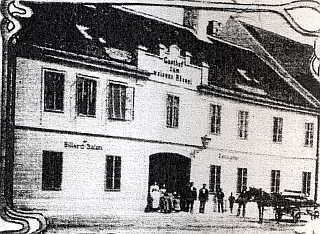
has not been identified, but may be a mistranslation or misspelling of Zum weißen Rössel (At the little White Horse or At the White Knight), a former guest house in Bruck. It was located at Altstadt no. 6, and on the first floor was a Mannschaftspuff (brothel for the lower ranks). Altstadt is the name of a street, not the old town as the name suggests. During the First World War, the street was the centre of nightlife and entertainment in Bruck.
Bohumil Vlček recalls a Czech waitress Růženka who worked in a certain tavern named u Růže (Zur Rose) and that many Czechs, including Jaroslav Hašek, visited regularly[a]. Josef Novotný also mentions u Růže in his war memoirs and locates it in Bruck[b] (p. 38).
Furthermore, Jan Morávek, in an interview that was printed in Průboj on 3 March 1968, states that Hašek, before departure to the front, was picked up by the patrol at U zlatého růže (Zur goldenen Rose). It is surely the same place, but there is great confusion about the actual name of the establishment. Vlček also mentions that Jaroslav Hašek, in the same situation, was detained in a pub near the railway station. If this is the case, the hypothesis about Zum weißen Rössel is invalid, as it was located about a ten-minute walk from the station. On the other hand, Vlček and Novotný both explicitly state that the "Rose" was in Bruck, whatever colour or shape it might have had.
Zum weißen Rössel
From 1903, newspaper articles reveal that Karl Wanicek (i.e. Karel Vaníček) was an innkeeper in Bruck, and in an article from 1922 it is disclosed that he was the owner of Zum weißen Rössel. Since he was presumably of Czech origin, it is quite likely that he employed Czech staff or even had family members working there.
Bohumil Vlček
V lágru nás nic nepoutalo, proto po zaměstnáni navštěvovali jsme v Mostě hostinec u "Růže" kde nás obsluhovala naše česká číšnice Ruz-Lamm / jak v románě též o tom zmínka :/ Tam byl stalým hostem Jaroslav Hašek, kterého jsem tam též osobni poznal. Většinou do restaurace chodili Češi, jednoročáci a i mužstvo od náhr. praporu.
Quote(s) from the novel
[II.5] Potom tam ještě k nim strčili frajtra Peroutku od 13. marškumpanie, který, když se včera rozšířila pověst po lágru, že se jede na pozici, se ztratil a byl ráno patrolou objeven u Bílé růže v Brucku. Vymlouval se, že chtěl před odjezdem prohlédnout známý skleník hraběte Harracha u Brucku a na zpáteční cestě že zabloudil, a teprve ráno celý unavený že dorazil k Bílé růži. (Zatím spal s Růženkou od Bílé růže.)
Credit: Bohumil Vlček, Josef Novotný, Wolfgang Gruber, Friedrich Petzneck, Klara Köttner-Benigni, Jan Morávek