The Good Soldier Švejk mentions numerous institutions and firms, both public and private. Until 15 September 2013, these were categorised as
'Places' on these pages. That categorisation only partly makes sense, because this type of entity cannot always be
tied to geographical coordinates in the way that cities, mountains, and rivers can. This page therefore covers
military and civilian institutions (including army units, regiments, etc.), organisations, hotels, public houses,
newspapers, and magazines.
The boundary between this page and 'Places' is not always clear-cut. Churches, for instance, rarely change location
yet are still included here. By contrast, Prague and Vienna remain in the 'Places' database because they have fixed
coordinates. Institutions, however, may move: Odvodní komise and Bendlovka are not unambiguous geographical terms,
so they are listed on this page.
The names are colour-coded according to their role in the novel, as illustrated by the following examples:
U kalicha, a location where the plot takes place.
k.u.k. Kriegsministerium, mentioned in the narrative.
U Rozvařilů
is mentioned in the anecdote about Oberst Fliedler.
Background
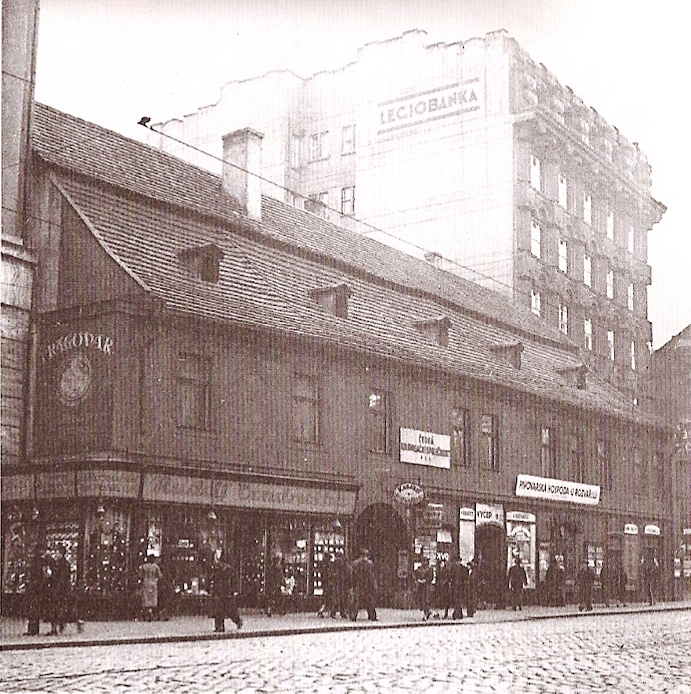
U Rozvařilů
was a brewery and restaurant at Poříčí, also offering entertainment in the form of concerts.
The enterprise still exists (2010), although in another form: as a restaurant in the department store Bílá Labuť. The original building has clearly been demolished.
Quote(s) from the novel
[III.3] Železnýmu už to bylo všechno jedno. Tak jak šli přes Poříč, kolem Rozvařilů, Železný skočil do průjezdu a ztratil se mu průchodem a zkazil Kaučukovýmu dědkovi tu velikou radost, až ho bude sázet do arestu.
[III.3] Až takhle jednou vod našeho regimentu podařilo se jednomu probodnout jednoho dragouna v hospodě ,U Bucků’, kterej mu chodil za holkou, a tu nás seřadili do čtverce, museli vyjít všichni, i marodka, kdo byl moc marod, toho dva drželi.
Šimáček
is indirectly mentioned by Leutnant Dub, who points to a melodramatic article about the killings in Sarajevo in the magazine Šimáček's Four-leaved Clover from July 1914.
Background
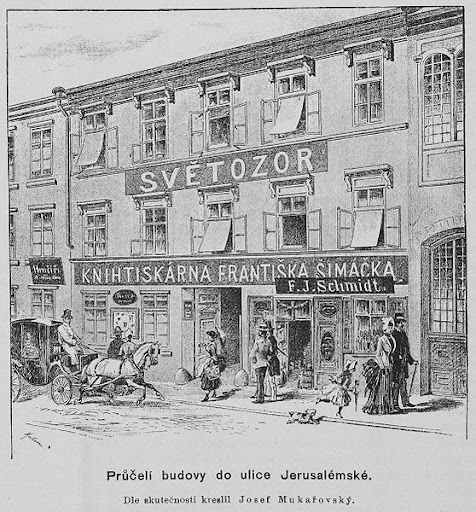
Šimáček
was a Czech publishing house founded by František Šimáček in 1856. In 1914, it was managed by Bohuslav Šimáček. They published the illustrated magazine Šimáčkův čtyřlístek, which is referred to in The Good Soldier Švejk. The magazine appeared twice a month. The company was located in Jerusalémská ulice in Nové město.
Quote(s) from the novel
[III.3] Nadporučík Lukáš jen zamručel k sobě, že asi zde v Humenném četníci odebírali ŠimáčkůvČtyřlístek s tím dojemným článkem. Vůbec se mu počalo vše najednou hnusit a cítil jenom potřebu opít se, aby ho opustil světobol. Vyšel tedy z vagonu a šel vyhledat Švejka.
Vilímek
is mentioned by Einjährigfreiwilliger Marek when he refers to their magazine The Illustrated War Correspondent and their material from the Russo-Japanese War of 1904–1905.
Background
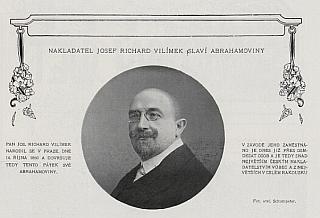
Vilímek
was a Czech publishing house founded in 1858 by Josef Richard Vilímek (1835–1911). His identically named son (1860–1938) took over in 1886, and they became one of the three largest publishers in Bohemia and later in Czechoslovakia.
The company was nationalised and closed after the communist coup in 1948. It briefly re-emerged as a brand name after the 1989 revolution, only to disappear in a privatisation scandal.
The magazine mentioned, Ilustrovaný válečný zpravodaj, is not listed in the catalogue of the Czech National Library, so the author surely had Obrazový zpravodaj z bojiště in mind. It was printed by Unie in 1904–1905 and edited by Jan Klecanda (1855–1920), the father of explorer Havlasa.
Quote(s) from the novel
[III.3] Zajímavé bude, jak náš batalion přepadne spícího nepřítele, k čemuž ovšem je potřeba slohu ,Ilustrovaného válečného zpravodaje’, který vycházel u Vilímka za rusko-japonské války.
Na zastávce
was one of the pubs where gardener Kalenda stopped during his world tour. A pub with the same name is mentioned again in the next chapter, in the anecdote about the building foreman who was not supposed to drink alcohol.
Background
Na zastávce
was apparently a pub in Vinohrady. It most probably refers to a pub at Palackého třída 713, now Francouzská. There were, however, two other pubs with this name in Prague, but neither of them matched gardener Kalenda's route.
Quote(s) from the novel
[III.3] Strašnickej zahradník, nějakej Josef Kalenda, ten se taky jednou vzdálil z domova, šel ze Strašnic na Vinohrady, stavil se ,Na zastávce’ v hospodě, ale to mu ještě nic nebylo, ale jakmile přišel do Korunní třídy k vodárně, bral v Korunní třídě až za kostel svaté Ludmily hospodu za hospodou a cítil už malátnost.
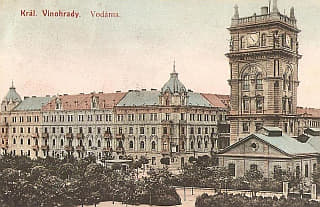
Vinohradská vodárna
was where gardener Kalenda began visiting pubs on his journey around the world.
Background
Vinohradská vodárna
is a former water tower, a neo-Renaissance building completed in 1891.
Quote(s) from the novel
[III.3] Strašnickej zahradník, nějakej Josef Kalenda, ten se taky jednou vzdálil z domova, šel ze Strašnic na Vinohrady, stavil se ,Na zastávce’ v hospodě, ale to mu ještě nic nebylo, ale jakmile přišel do Korunní třídy k vodárně, bral v Korunní třídě až za kostel svaté Ludmily hospodu za hospodou a cítil už malátnost.
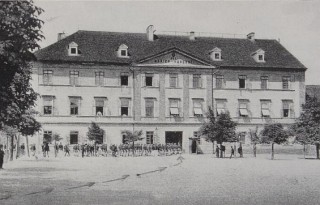
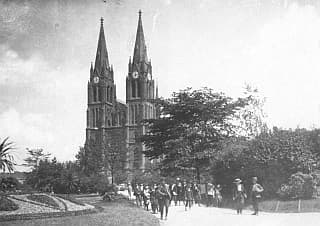
Pohled na náměstí Míru s kostelem sv. Ludmily s parkovou úpravou (kol. 1900)
Kostel svaté Ludmily
is amongst the many places mentioned in Švejk's long anecdote about gardener Kalenda. He walked past this church on his world tour.
Background
Kostel svaté Ludmily
is a twin-spired, neo-gothic church at Náměstí míru in Vinohrady that was opened in 1893. Jaroslav Hašek married Jarmila Mayerová here on 23 May 1910.
Quote(s) from the novel
[III.3] Strašnickej zahradník, nějakej Josef Kalenda, ten se taky jednou vzdálil z domova, šel ze Strašnic na Vinohrady, stavil se ,Na zastávce’ v hospodě, ale to mu ještě nic nebylo, ale jakmile přišel do Korunní třídy k vodárně, bral v Korunní třídě až za kostel svaté Ludmily hospodu za hospodou a cítil už malátnost.
U remísy
was the pub where gardener Kalenda, from Švejk's anecdote, made a bet with a tram driver that he could walk around the world in three weeks.
Background
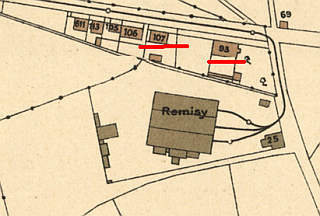
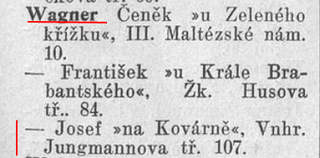
U remísy
was apparently a pub in Strašnice, judging by the name, near a tram depot (vozovna). There is still a tram depot in Strašnice, located in Vinohradská třída. It was opened in 1908 and was the oldest of its kind in Prague.
In 1910, there were three taverns close to the tram depot, two of them next door at Jungmannová třida 93 and 107. The landlords were Josef Šmíd and Josef Wagner, respectively. Both are listed as na Kovárně, but may still have been known as "U remisy" in everyday speech. The exact identification is therefore difficult, but Wagner's pub is probably the best guess, as he is the only one listed in the address book for Vinohrady from 1912.
Note that the border between Strašnice and Vinohrady ran between the tram depot and the two pubs, but Švejk would probably not have been aware of this fine distinction.
A restaurant with the same name in the same place still existed in 2010, although the address was very different, both in terms of street names and house numbering.
Quote(s) from the novel
[III.3] Nedal se však tím odstrašit, poněvadž se vsadil předtím ten večer v Strašnicích v hospodě ,U remisy’ s jedním řídičem vod elektriky, že udělá pěšky cestu kolem světa za tři neděle. Počal se tedy dál a dál vzdalovat vod svýho domova, až se přivalil do ,Černýho pivovaru’ na Karlově náměstí, a vodtamtuď šel na Malou Stranu k Sv. Tomáši do pivovaru a odtamtud přes restauraci ,U Montágů’ a ještě vejš přes hospodu ,U krále brabanskýho’, pak na ,Krásnou vyhlídku’, odtud do Strahovskýho kláštera do pivovaru.
Černý pivovar
was one of the pubs gardener Kalenda visited on his legendary pub crawl (world tour).
Background
Černý pivovarBlack Brewery
was a brewery and restaurant at Karlovo náměstí 15. In 1891, it was registered in the name of František Fiala and operated until 1920.
In 1934, the restaurant re-opened in the new building constructed on the site, but it is not known when it closed again. The building still exists but now serves an entirely different function.
Quote(s) from the novel
[III.3] Počal se tedy dál a dál vzdalovat vod svýho domova, až se přivalil do ,Černýho pivovaru’ na Karlově náměstí, a vodtamtuď šel na Malou Stranu k Sv. Tomáši do pivovaru a odtamtud přes restauraci ,U Montágů’ a ještě vejš přes hospodu ,U krále brabanskýho’, pak na ,Krásnou vyhlídku’, odtud do Strahovskýho kláštera do pivovaru.
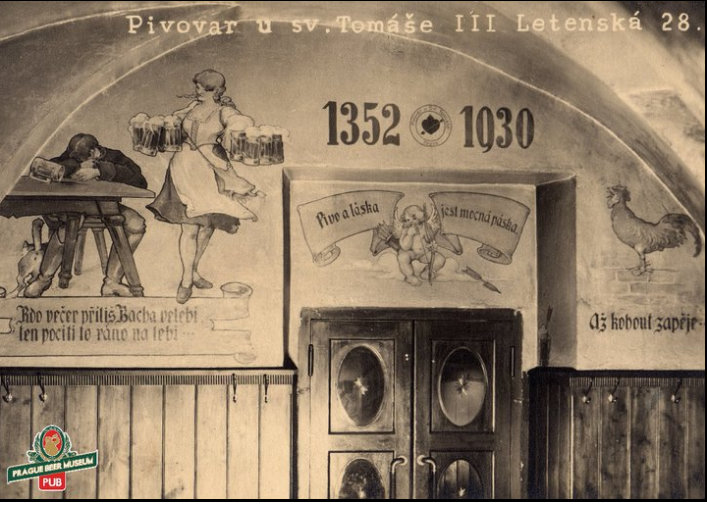
U svatého Tomáše
was a restaurant and brewery in Malá Strana, known for its dark beer. It was one of the oldest breweries in Bohemia but closed in 2006 when the building was converted into a hotel.
Quote(s) from the novel
[III.3] Počal se tedy dál a dál vzdalovat vod svýho domova, až se přivalil do ,Černýho pivovaru’ na Karlově náměstí, a vodtamtuď šel na Malou Stranu k Sv. Tomáši do pivovaru a odtamtud přes restauraci ,U Montágů’ a ještě vejš přes hospodu ,U krále brabanskýho’, pak na ,Krásnou vyhlídku’, odtud do Strahovskýho kláštera do pivovaru.
U Montágů
was a restaurant at Malostranské náměstí, managed by Antonín Janda in 1891 and as late as 1912. The U Montágů building still exists, although it is better known as Palác Smiřických. It forms part of the complex housing sections of the Chamber of Deputies of the Czech Parliament.
Quote(s) from the novel
[III.3] Počal se tedy dál a dál vzdalovat vod svýho domova, až se přivalil do ,Černýho pivovaru’ na Karlově náměstí, a vodtamtuď šel na Malou Stranu k Sv. Tomáši do pivovaru a odtamtud přes restauraci ,U Montágů’ a ještě vejš přes hospodu ,U krále brabanskýho’, pak na ,Krásnou vyhlídku’, odtud do Strahovskýho kláštera do pivovaru.
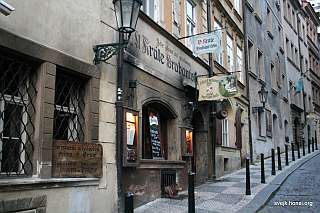
U krále brabantského
is one of the oldest existing pubs in Prague, now (2010) part of a chain with a Medieval theme. According to their website, it was opened as early as 1375 and has operated almost continuously ever since.
Hašek and the King of Brabant
Ladislav Hájek, 1925
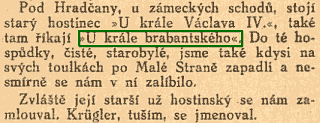
Ladislav Hájek provides a number of details about the establishment, and describes his visits there with Hašek, Opočenský, Josef Lada and others. He remembers the entertaining landlord Krügler, a former regimental musician. The landlord was good at whistling and drumming with his fingers. He also entertained his guests with his storytelling.
In one of the stories, Krüger claims that a former landlord murdered a guest who defrauded him and dumped the body in the underground sewer on the street. The body, with the head down the sewer and feet sticking up, was only found further down the street when the sewer flooded a few days later. This grotesque tale was one of Hašek's favourites.
Humoristické listy,27.8.1915
Another story that Hašek also liked was about a group of schoolchildren from the countryside who were treated by the landlord to beer and sausages. They thanked the landlord by singing, although he would have preferred to be paid! This story was eventually published by Antonín Nečásek in Humoristické listy.
In the end, Ladislav Hájek and his friends stopped going there after Hašek caused an outrage by tearing apart a painting of King Václav IV.
Used for secret meetings
Sergey Soloukh points to a note by Zdeněk Matěj Kuděj in his book Ve dvou se to lépe táhne. Kuděj describes the tavern as dark and dingy, and "popular for secret meetings". This information alone makes the pub a good candidate to host the conspiratorial meeting between Švejk and Blahník.
Landlords
Věstník obecní královského hlavního města Prahy,13.7.1912
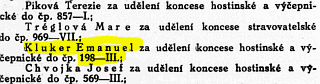
The address books show that the landlord in 1891 was František Simáček, and in 1907 and 1910 a Josef Král ran the bar. He was succeeded by Emanuel Klucker (born in Graz in 1867), who on 4 July 1912 was granted a licence by the city magistrate to serve alcohol at the premises.
Klucker was a colourful character with a background as a regimental musician, vividly described by Antonín Nečásek in Humoristické listy in 1915. His tavern struggled in the beginning, but by 1915 it was thriving. Klucker (also written Kluker) was definitely the landlord "Krügler" that Ladislav Hájek described. Klucker was not new to the restaurant business: in 1907 he was running U Pavlanských at Újezd 25, also in Malá Strana.
Murder
Národní listy,18.5.1885
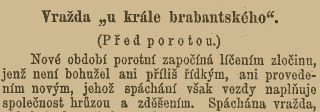
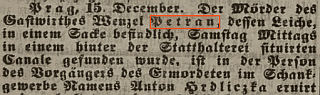
The murder that Klucker describes (as retold by Ladislav Hájek) took place in the early hours of 10 December 1884, but the victim was landlord Václav Petráň, not a guest. He was robbed and in the resulting fight, he was suffocated. The body was thrown into the sewers outside the pub and discovered a few days later during a flood.
Brünner Zeitung,16.12.1884
The murderer Antonín Hrdlička was arrested four days later and put on trial in May 1885. The case was heard for two days and the verdict was delivered on 19 May 1885. Hrdlička was sentenced to death by hanging, but on 11 July the sentence was commuted to life imprisonment by imperial decree. The case was widely reported in newspapers across Austria.
Quote(s) from the novel
[III.3] Počal se tedy dál a dál vzdalovat vod svýho domova, až se přivalil do ,Černýho pivovaru’ na Karlově náměstí, a vodtamtuď šel na Malou Stranu k Sv. Tomáši do pivovaru a odtamtud přes restauraci ,U Montágů’ a ještě vejš přes hospodu ,U krále brabanskýho’, pak na ,Krásnou vyhlídku’, odtud do Strahovskýho kláštera do pivovaru.
Strahovský klášter
is mentioned because gardener Kalenda stopped by the monastery brewery just before homesickness overwhelmed him.
Background
Strahovský klášterStrahov Monastery
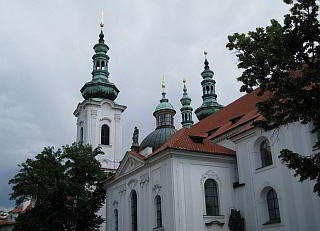
is located on Strahov Hill in Prague and is one of the Czech capital's many beautiful landmarks. It is situated in the Hradčany area, not far from the castle itself. It belongs to the Premonstratensian order and was founded around 1140.
Quote(s) from the novel
[III.3] Počal se tedy dál a dál vzdalovat vod svýho domova, až se přivalil do ,Černýho pivovaru’ na Karlově náměstí, a vodtamtuď šel na Malou Stranu k Sv. Tomáši do pivovaru a odtamtud přes restauraci ,U Montágů’ a ještě vejš přes hospodu ,U krále brabanskýho’, pak na ,Krásnou vyhlídku’, odtud do Strahovskýho kláštera do pivovaru.
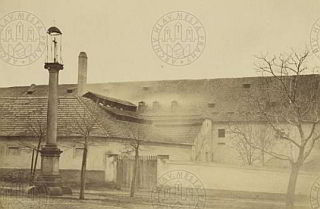
Pohled na pivovar Strahovského kláštera na Strahovském nádvoří - dům čp. 135 na Hradčanech. Vlevo sloup s kovovým křížem pod stříškou,1867
Der Böhmische Bierbrauer,1.12.1900
Čech,20.1.1910
Strahovský pivovar
was the final stop on gardener Kalenda's journey, before homesickness got the better of him down at Loretánské náměstí.
Background
Strahovský pivovar
was a brewery and restaurant that appears to have closed down some time before 1919, and is listed in the address books from at least 1870 to 1910. Beer has been brewed on the site since at least the 15th century, although not continuously.
Before the First World War
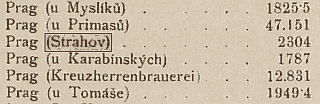
The tenant from 1896 to 1908 was Jan Řezníček (born 1841), and he was also the last brew master to make beer on the monastery premises in the 20th century. In 1899, the production volume was 2,304 hectolitres. In a speech at the 1908 Jubilee exhibition in Prague, Řezníček stated that the brewery had been operating since 1780.
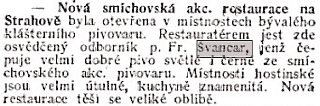
The brewery ceased operation in the autumn of 1908, and Řezníček took on a similar position in Stará Boleslav. In 1910, the restaurant part was re-opened after refurbishment, but now with beer from the Smíchov brewery and František Švancar as landlord.
New beginning
In 2000, a microbrewery with restaurant called Klášterní pivovar Strahov was established on the same site, but it has no connection with the old brewery.
Quote(s) from the novel
[III.3] Počal se tedy dál a dál vzdalovat vod svýho domova, až se přivalil do ,Černýho pivovaru’ na Karlově náměstí, a vodtamtuď šel na Malou Stranu k Sv. Tomáši do pivovaru a odtamtud přes restauraci ,U Montágů’ a ještě vejš přes hospodu ,U krále brabanskýho’, pak na ,Krásnou vyhlídku’, odtud do Strahovskýho kláštera do pivovaru.
Odkolek
and the fire at their mills is mentioned by Švejk in his sleep, when he slept off the effects of the bottle of cognac at the station in Humenné.
Background
Odkolek
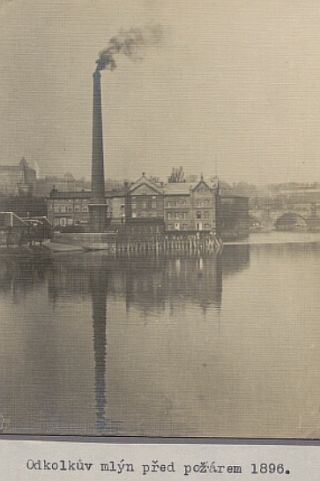
was a flour mill and bakery founded by František Odkolek in 1850. The fire referred to happened in 1896, and it was the original mill at Kampa that burned down.
It was not rebuilt; instead, a new mill was constructed at Vysočany. The factory is now owned by United Bakeries. The old mill has since been rebuilt and today it houses Národní muzeum Kampa.
Quote(s) from the novel
[III.3] Jednoroční dobrovolník začal budit Švejka. „Švejku, hoří, vstávej!“ „Když tenkrát hořely Odkolkovy mlejny,“ zabručel Švejk, obraceje se opět na druhý bok, „přijeli hasiči až z Vysočan...“
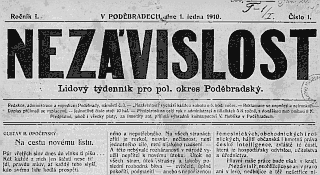
The first issue of the newspaper, with Hájek as editor.
Nezávislost,1.1.1910
Jaroslav Hašek, Ladislav Hájek with other members of Strana mírného pokroku.
Lázně Poděbrady,21.5.1913
Nezávislost is mentioned 2 times in The Good Soldier Švejk.
Nezávislost
is mentioned by Švejk when he tells Oberleutnant Lukáš that he knows only one author: a certain Ladislav Hájek from Domažlice, who was the editor of this newspaper.
Background
NezávislostIndependence
was a weekly newspaper published in Poděbrady from 1910 to at least 1931. The first issue appeared on 1 January 1910, with Ladislav Hájek as editor until October of that year. He was succeeded by Ladislav Volenec. The editorial line was initially patriotic, with the stated goal of establishing a Czech state[a].
During the summer seasons from 1910 to 1913, a supplement, Lázně Poděbrady (Spa Poděbrady), was published. In 1913, this magazine was separated from the main newspaper, with Ladislav Hájek listed as both owner and editor. That year, Lázně Poděbrady published a couple of Hašek's stories and a photograph of several Strana mírného pokroku v mezích zákona members, including Hašek and Hájek [c].
Quote(s) from the novel
[III.3] Poslušně hlásím, pane lajtnant, že s takovým nočníkem byla jednou pěkná legrace v lázních Poděbradech. Vo tom se u nás vypravovalo na Vinohradech v hospodě. Tenkrát totiž začali vydávat v Poděbradech časopejsek ,Nezávislost’ a poděbradskej lekárník byl toho hlavní hlavou, a redaktorem tam udělali ňákýho Ladislava Hájka Domažlickýho. A ten pan lekárník, to vám byl takovej podivín, že sbíral starý hrnce a jiný takový drobotiny, až byl samej museum. A von si jednou, ten Hájek Domažlickej, pozval na návštěvu do poděbradskejch lázní jednoho kamaráda, kterej taky psal do novin, a vožrali se tam spolu, poněvadž se už přes tejden neviděli, a ten mu slíbil, že mu za to pohoštění napíše fejton do tý ,Nezávislosti’, do toho nezávislýho časopisu, ve kterejm von byl vodvislej.
Polévkový ústavSoup institute
usually referred to charitable organisations that ran soup kitchens for poor children, often associated with schools. They were mostly run by the nobility, politicians, or wealthy citizens. It is unlikely that any such charity was managed by the city of Prague.
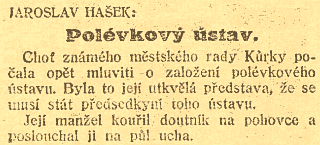
Jaroslav Hašek wrote a short story called Polévkový ústav, in which he made fun of Mrs. Kůrka who wanted to set up a soup institute[a].
Quote(s) from the novel
[III.3] „Moh to ten náš nebožtík,“ řekl Švejk, „vodevzdat polívkovýmu ústavu města Prahy, ale takhle je to přeci jen lepší, von by si třeba pan starosta za ten vobnos koupil jitrnici na gábl.“